What Happens When You Call a Tow Truck? (The Full Process Explained)
When you call a tow truck, here’s what happens: you call the company, a dispatcher confirms your location, vehicle details, and destination, then gives you a price estimate and expected arrival time. A tow truck is sent to your location (typically 20–45 minutes in Hamilton). The driver arrives, confirms the service, has you sign a consent form, loads your vehicle, and transports it to your chosen destination. You receive an itemized invoice and pay by cash, debit, or credit card. The entire process — from phone call to your car arriving at the shop — usually takes 45 minutes to 2 hours depending on distance.
If you’ve never needed a tow truck before, the whole experience can feel stressful and unfamiliar. You’re standing on the side of the road, your car won’t move, and you’re not sure what happens next. Who do you call? What information do they need? How long will it take? What will it cost? Will your car be safe?
The good news is that calling a tow truck is simpler than most people think. The process is straightforward, and knowing what to expect ahead of time eliminates almost all of the anxiety. Whether this is your first time or you just want to understand the process better, this guide walks you through every step — from the moment you realize you need help to the moment your car arrives safely at its destination.
And if you need to call a tow truck right now in Hamilton, call Towing Hamilton at (905) 481-0133 — we’ll walk you through everything.
Before You Call: Make Sure You’re Safe
Before you pick up the phone, take 30 seconds to secure your safety. The tow truck can wait — your safety can’t:
Get off the road if you can. If your car is still moving (even slowly), steer to the right shoulder, a parking lot, or a side street. The further from traffic, the better. If you’re on the QEW, Highway 403, or any Hamilton highway, pull onto the right shoulder as far as possible.
Turn on your hazard lights. This is the single most important visibility step. Hazard lights run off the battery, so they’ll work even if the engine is dead.
Stay in your vehicle on highways. If you’re on a highway or busy road, staying inside with your seatbelt on is safer than standing outside. Pedestrians on highway shoulders are at significant risk from passing traffic — Ontario’s Move Over law exists precisely because of these dangers.
Call 911 if you’re in danger. If your vehicle is blocking a lane, if you’ve been in an accident with injuries, or if your location feels unsafe for any reason — call 911 first, tow truck second. Police can manage traffic and coordinate emergency services.
The Full Tow Truck Process: Step by Step
Here’s exactly what happens from the moment you call a tow truck to when your vehicle arrives at its destination:
You Make the Call
Call a towing company directly, your insurance company’s roadside assistance line, or CAA if you’re a member. For the fastest service in Hamilton, call a local company like Towing Hamilton at (905) 481-0133 — local operators typically arrive faster because they’re already in the area. Have your phone charged and your location ready.
The Dispatcher Asks You Key Questions
The dispatcher will ask for several pieces of information. Don’t worry — they’re used to working with stressed drivers and will guide you through it. They’ll ask: your exact location (use Google Maps to share coordinates or describe nearby landmarks), your vehicle’s year, make, and model (e.g., “2020 Honda CR-V AWD”), what happened (breakdown, flat tire, accident, dead battery, locked out), and where you want the vehicle taken (your mechanic, a dealer, your home).
You Get a Price Estimate and ETA
Based on your location, destination, and vehicle type, the dispatcher gives you a cost estimate and expected arrival time. In Hamilton, a local tow typically costs $85–$200 and the truck usually arrives in 20–45 minutes. If the estimate sounds reasonable, you confirm the service. If it sounds high, you can ask for a breakdown or call another company. Get the estimate before agreeing — not after.
The Tow Truck Is Dispatched
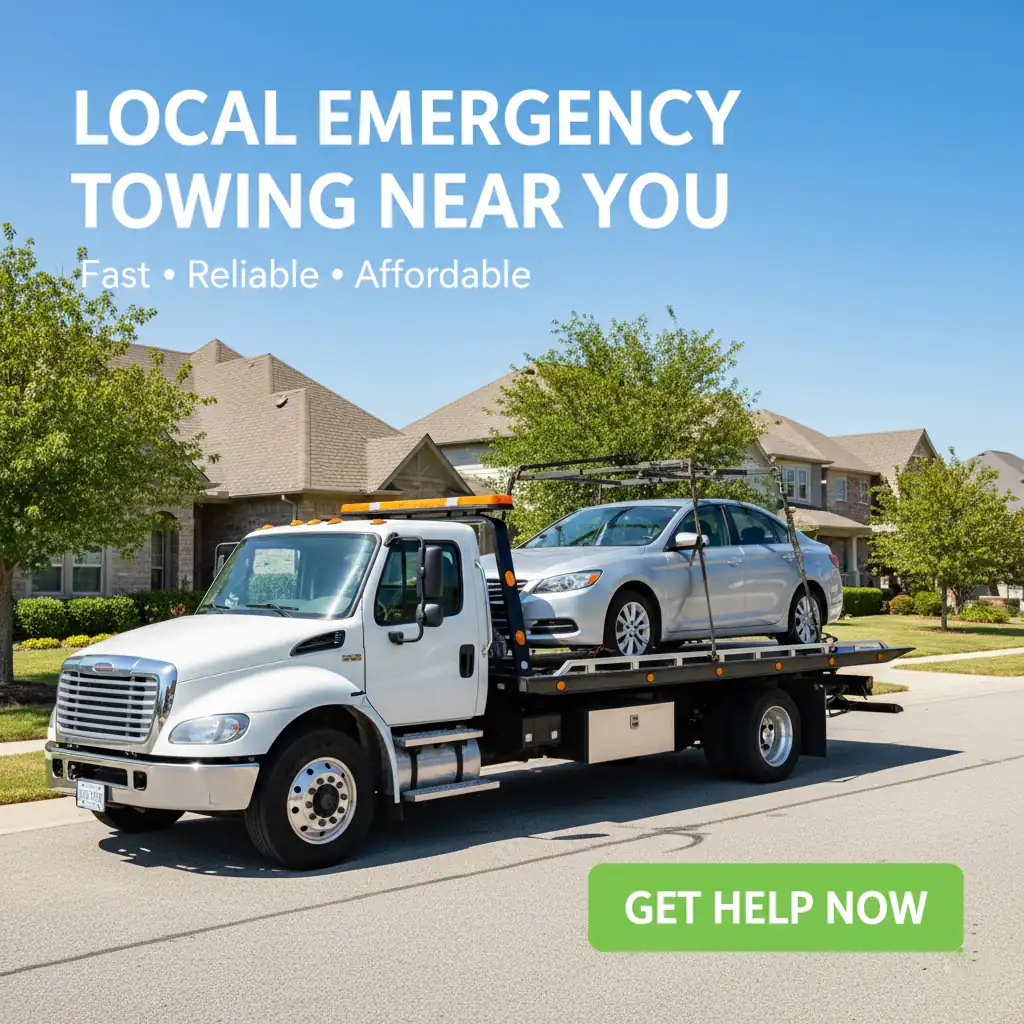
A truck is assigned and heads to your location. The dispatcher selects the right truck type for your vehicle — a flatbed for AWD, luxury, or damaged vehicles, or a wheel-lift for standard FWD cars on short local tows. Some companies send you a text with the driver’s name and ETA. While you wait, stay in your vehicle with your seatbelt on (on highways) or wait nearby in a safe location.
The Driver Arrives and Introduces Themselves
When the tow truck arrives, the driver will approach you, introduce themselves, and confirm the service details — your name, the vehicle, the issue, and the destination. Under Ontario’s TSSEA regulations, the driver must hold a valid provincial certificate — issued under the Towing and Storage Safety and Enforcement Act, 2021 — and the operator’s certificate must be visible on the truck. You have the right to ask to see both.
You Review and Sign the Consent Form
Before any towing begins, the driver presents a Consent to Tow form — this is required by Ontario law. The form documents the agreed-upon price, destination, and service details. Read it before signing. The price on the consent form should match the estimate you received on the phone. Never sign a blank form or one with missing information.
Your Vehicle Is Loaded onto the Truck
The driver loads your vehicle using the appropriate method. For a flatbed: the bed tilts down, your car is driven or winched up, positioned, and secured with tie-down straps. This takes about 10–15 minutes. For a wheel-lift: a metal yoke slides under the front or rear wheels and lifts them off the ground. This takes about 3–5 minutes. In both cases, the driver secures the vehicle before moving. You can watch the process — it’s routine for them.
You Ride Along (or Make Your Own Way)
Most tow truck drivers allow one passenger to ride in the cab of the truck to the destination. This is standard practice but not guaranteed — ask when the driver arrives. If you have multiple passengers (family in the car), only one can usually ride in the truck. Others will need to arrange a ride-share, taxi, or pickup from someone they know. Grab your wallet, phone, keys, and any valuables from your car before loading.
Your Vehicle Is Delivered to the Destination
The driver takes the most direct route to your chosen destination — your mechanic, a dealership, your home, or wherever you directed. Under the TSSEA, the operator must take a direct route and cannot divert to a storage yard, body shop, or other location without your explicit consent. At the destination, the vehicle is unloaded and positioned wherever you or the facility specifies.
You Receive the Invoice and Pay
The driver provides an itemized invoice listing each charge: base rate, per-km distance charge, and any applicable surcharges. Review it — the total should match or be close to the estimate you agreed upon. Payment is accepted via cash, debit, credit card, or cheque (all required under the TSSEA). Keep the invoice — you may need it for insurance reimbursement. And that’s it — you’re done.
What Information to Have Ready When You Call
Having these details ready before you call makes the process faster and ensures the right truck is sent:
Your exact location. The most useful thing you can provide. Open Google Maps on your phone and share the GPS pin or read the coordinates. Alternatively, describe nearby landmarks: “I’m on the QEW eastbound, just past the Centennial Parkway exit” or “I’m in the Canadian Tire parking lot at Upper James and Mohawk.” Include which lane or shoulder you’re on if you’re on a highway.
Your vehicle details. Year, make, model, and colour. “2022 white Toyota RAV4” tells the driver exactly what to look for and lets the dispatcher determine the right truck type. Mention if it’s AWD — this determines whether a flatbed is needed. Not sure about your drivetrain? Check out our guide on how your drivetrain affects towing.
What happened. A brief description: “It won’t start and I’ve tried jumping it,” “I have a flat tire and no spare,” “I was in a fender-bender and the car is undriveable,” or “It just died while driving and I coasted to the shoulder.” This helps the dispatcher determine whether you need a tow or if an on-site service (like a battery boost or tire change) might solve the problem without towing.
Where you want the car taken. Have an address or business name ready. Your mechanic’s name and address, a specific dealership, your home address, or even “the nearest qualified repair facility” are all valid answers. You choose the destination — the tow company does not.
Your phone number. The driver needs to call or text you if they have trouble finding your location. Make sure your phone is charged — if the battery is low, turn off non-essential apps and reduce screen brightness to conserve power while you wait.
Who Should You Call? Your Three Options
When you need to book a tow truck, you have three main options. Each works differently and has trade-offs:
For a detailed breakdown of all coverage options — including which insurance plans include roadside, what each CAA tier covers, and when direct-pay is the best choice — see our complete guide on what roadside assistance actually includes.
How Long Does It Take for a Tow Truck to Arrive?
Arrival times depend on who you call, where you are, and demand at the time. Here’s what to expect in Hamilton:
Local towing company (direct call): 20–45 minutes in most cases. Local operators dispatch from within the Hamilton area, so travel time is minimal. During peak demand (winter storms, holiday weekends), this may extend to 45–60 minutes.
Insurance roadside dispatch: 30–90 minutes. Your insurer contacts a contracted towing company, which may or may not be local. The dispatch chain adds time. During peak periods, 60–120 minutes is common.
CAA: 30–90 minutes. Similar to insurance dispatch, with priority given to members in unsafe locations. CAA’s service is generally reliable, but during extreme cold snaps when call volumes spike by 200–300%, wait times can exceed 2 hours.
💡 Pro Tip: If you call insurance or CAA and the estimated wait is 60+ minutes but you’re in an unsafe location, call a local towing company directly and pay out of pocket. Many insurance policies reimburse towing costs after the fact if you submit the receipt. The insurance reimbursement process is straightforward — faster service now, reimbursement later.
First Time Calling a Tow Truck?
We’ll walk you through every step — no stress, no surprises, no hidden fees.
(905) 481-0133
How Much Does It Cost to Call a Tow Truck in Hamilton?
If you’re paying out of pocket (no insurance or CAA coverage), here are the typical costs for towing and roadside services in the Hamilton area:
For a detailed breakdown of per-km pricing, distance-based estimates, and factors that affect cost, see our full pricing guide on how much towing costs per kilometre in Ontario. Or get an instant estimate at the Towing Hamilton cost estimator.
What to Do While You Wait for the Tow Truck
The waiting period between your call and the truck’s arrival is typically 20–45 minutes. Here’s how to use that time wisely:
Stay safe. Keep your hazard lights on, your seatbelt fastened (on highways), and stay aware of your surroundings. Don’t stand behind or beside your vehicle on a roadway.
Contact your mechanic or destination. Call ahead to let them know a towed vehicle is coming. If it’s after business hours, check whether the shop has an after-hours drop-off area or lockbox for keys.
Gather your belongings. Collect anything you’ll need from the car — wallet, phone charger, laptop bag, child car seats, medications, sunglasses, toll transponders. Once the car is loaded, accessing the interior is difficult or impossible.
Take photos. If the breakdown followed an accident or unusual event, photograph your vehicle’s position, any visible damage, and surrounding conditions. These photos are useful for insurance claims.
Contact your insurance company. If this is accident-related, notify your insurer as soon as possible. Let them know what happened, that a tow is arranged, and where the vehicle is going. Early notification speeds up the claims process.
Conserve your phone battery. Your phone is your lifeline. If the battery is below 30%, turn off Wi-Fi, Bluetooth, location services, and reduce screen brightness. Turn off all non-essential apps. You need enough charge to receive the driver’s call when they’re close.
Your Rights During the Towing Process
Ontario’s TSSEA gives you specific legal protections every time you interact with a tow operator. Even as a first-timer, you have these rights:
✅ You choose the towing company. No one can force you to use a specific tow truck, even at an accident scene — unless police specifically direct your vehicle to be moved for safety.
✅ You choose where your car goes. The destination is your decision. The operator cannot take your vehicle to a location you haven’t agreed to.
✅ You must see the rate schedule before consenting. The operator must show you their published rates before you sign anything.
✅ You must sign a consent form before towing begins. No consent = no legal authority to tow.
✅ You receive an itemized invoice. Every charge must be listed and explained.
✅ You can pay by cash, debit, credit card, or cheque. Multiple payment methods are required by law.
✅ You can refuse an uninvited tow truck. If a truck arrives that you didn’t call, you are under zero obligation to use them. Unsolicited towing is a prohibited practice under the TSSEA. For the complete list of your protections, read our guide on your towing rights in Ontario.
Maybe You Don’t Need a Tow: On-Site Services That Solve the Problem
Not every roadside emergency requires towing. Many common problems can be fixed on the spot — saving you time and money. Here’s when an on-site service might be all you need:
Dead battery → Battery boost service ($75–$125). A technician jump-starts your car on the spot. You drive to a shop for a battery test. No towing needed.
Flat tire with a spare → Tire change service ($75–$150). A technician swaps the flat for your spare. You drive to a tire shop. No towing needed. (If you don’t have a spare, towing is required.)
Ran out of gas → Fuel delivery service ($75–$100). A technician brings 5–10 litres to your location. You drive to the nearest gas station. No towing needed. Read our full guide on what to do when you run out of gas.
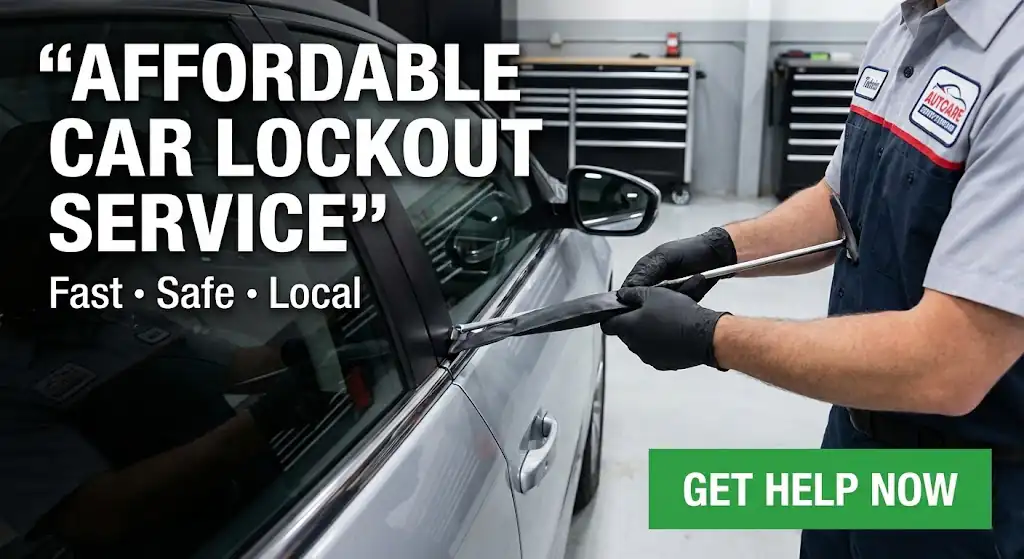
Locked out of your car → Car lockout service ($75–$150). A technician opens the door without damage. No towing needed. See our guide on what to do when you’re locked out.
When you call Towing Hamilton, the dispatcher will help you determine whether you actually need a tow or if an on-site service will get you back on the road faster and cheaper.
Special Situations: After-Hours, Accidents, and Highways
Some towing situations have unique considerations. Here’s what changes in each scenario:
After-Hours and Weekend Towing
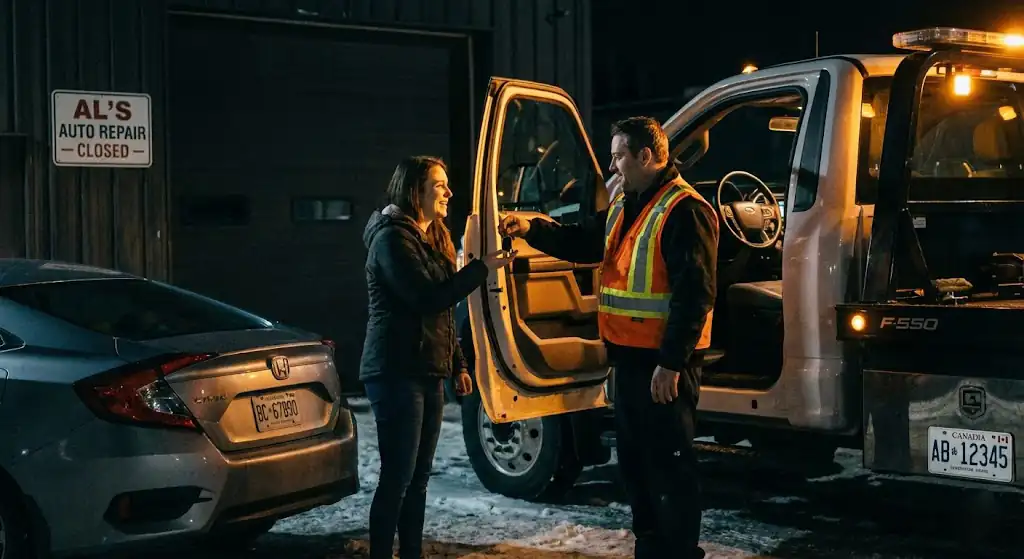
The process is identical to daytime towing — 24-hour towing companies operate around the clock. The only differences: you may pay a 20–50% after-hours surcharge, and your mechanic or destination may be closed. If the shop is closed, ask the tow driver to leave the vehicle in the shop’s parking lot and drop the keys through their mail slot or key lockbox (most shops have one for after-hours drop-offs).
Towing After an Accident
After a collision, safety comes first — check for injuries, call 911 if needed, and exchange information with the other driver. When it’s time for the tow, you choose the company and destination. Request a flatbed for any vehicle with collision damage. If a tow truck appears that you didn’t call, you can refuse them. See our complete post-accident towing guide and our article on working with insurance adjusters.
Highway Breakdowns
Highway towing follows the same process, but safety precautions are more critical. Stay inside your vehicle with your seatbelt on. Keep your hazard lights on. If you’re on the QEW, 403, the Linc, or the Red Hill, the tow truck driver is experienced with highway pickups — they’ll position their truck to shield your vehicle from traffic. If your vehicle is blocking a live lane, call 911 and let police coordinate the tow for maximum safety.
What to Do After Your Car Has Been Towed
Once the tow is complete and you’ve paid, there are a few follow-up steps to take care of:
Keep the invoice. Store the itemized invoice in a safe place. You’ll need it if you’re submitting an insurance reimbursement claim, disputing any charges, or claiming the expense on your taxes (if the tow was business-related).
Contact your mechanic. Confirm they received the vehicle and discuss the repair timeline. Ask for a diagnostic estimate before authorizing major work.
File an insurance claim if applicable. If the tow was due to an accident, contact your insurer with the tow invoice, photos, and repair details. If you paid for towing that your roadside plan should have covered, submit the receipt for reimbursement.
Leave a review. If the tow operator provided good service, a Google review helps other Hamilton drivers find trustworthy companies. If the experience was poor, a factual review warns others — and you can file a complaint with the Ontario MTO if any TSSEA rules were violated.
Save the company’s number. If you had a positive experience, save their number in your phone contacts. Next time you need help, you won’t need to search — you’ll have a trusted towing company ready to call.
Be Ready Before You Need It: Prepare Now
The best time to understand the tow truck process is before you’re standing on a highway shoulder in the rain. Here’s a quick preparation checklist:
Save a towing company’s number now. Add (905) 481-0133 (Towing Hamilton) to your phone contacts. When you need help, it’s one tap — no searching, no Googling from the shoulder of the QEW.
Know your coverage. Call your auto insurer and ask whether your policy includes roadside assistance. Check your CAA membership status if you have one. Look at your credit card benefits — some premium cards include roadside service. Our roadside assistance guide explains every coverage option in detail.
Know your drivetrain. FWD, RWD, AWD, or 4WD — this determines which truck type you need. Check the badge on your trunk or your owner’s manual. Our drivetrain guide explains why it matters and how to check.
Keep a phone charger in your car. A portable battery bank (power bank) ensures you can make the call even if your phone is dying. It’s the single most useful item in any roadside emergency kit.
Bookmark the cost estimator. Save towinghamilton.ca/towing-cost-estimator on your phone for instant price estimates whenever you need one.
Tow Truck Process FAQ
What happens when you call a tow truck?
You call the company, provide your location and vehicle details, receive a price estimate and ETA, and confirm the service. A truck is dispatched (20–45 minutes in Hamilton). The driver arrives, confirms details, presents a consent form for your signature, loads the vehicle, transports it to your chosen destination, provides an itemized invoice, and accepts payment by cash, debit, or credit card. The whole process typically takes 45 minutes to 2 hours.
How do I call a tow truck?
Call a local towing company directly (fastest option), your auto insurance company’s roadside assistance line, or CAA if you’re a member. In Hamilton, call Towing Hamilton at (905) 481-0133 for 24/7 service. Have your location, vehicle year/make/model, the problem (breakdown, flat, accident), and your desired destination ready when you call.
How long does a tow truck take to arrive?
A local towing company called directly in Hamilton typically arrives in 20–45 minutes. Insurance and CAA dispatch typically take 30–90 minutes. During peak demand periods (winter storms, cold snaps, holiday weekends), wait times through any provider can be longer. If you’re in an unsafe location and the estimated wait is too long, call a local company directly for faster service.
Can I ride in the tow truck with my car?
Most tow truck drivers allow one passenger to ride in the cab to the destination. This is standard practice but not guaranteed — ask the driver when they arrive. Additional passengers (family members, etc.) will need to arrange alternative transportation. Children in car seats cannot ride in the tow truck cab in most cases. Always remove your valuables and essentials from your vehicle before it’s loaded.
Do I need to be present when the tow truck arrives?
Yes, in most cases. You need to sign the Consent to Tow form, confirm the destination, and pay for the service. If your car needs to be towed from a mechanic’s lot, a parking garage, or another location where you’ve left it, you can sometimes arrange the tow remotely — but you’ll need to make prior arrangements with both the tow company and the location where the car is parked. Discuss this with the dispatcher when you call.
What if a tow truck shows up that I didn’t call?
Do not sign anything and do not agree to service. Under the TSSEA, you have the right to choose your own tow company. Unsolicited towing is a prohibited practice in Ontario. Stay in your vehicle, politely decline, and call the company you want to use. If the uninvited operator is aggressive or refuses to leave, call police. This behaviour is most common at accident scenes.
Do I choose where my car gets towed?
Yes — always. Under Ontario law, you decide the destination. The tow operator cannot take your vehicle to a location you haven’t explicitly agreed to. This is documented on the Consent to Tow form. Common destinations include your mechanic, a dealership, your home, or a specific body shop. If you’re not sure where to go, the “nearest qualified repair facility” is a valid instruction.
What should I remove from my car before it gets towed?
Remove your wallet, phone, keys, phone charger, laptop, any medications, child car seats, toll transponders (407 ETR), garage door openers, sunglasses, and any valuables. Once the vehicle is loaded, accessing the interior during transport is usually not possible. If you forget something inside, you can retrieve it at the destination once the car is unloaded.
Can I get reimbursed for towing by my insurance?
Many Ontario auto insurance policies offer reimbursement for towing costs, even if you arranged the tow independently rather than through their dispatch service. Keep the itemized invoice and submit it to your insurer with a brief description of the event. Reimbursement amounts and eligibility vary by policy — check your specific coverage or read our guide on whether insurance covers towing in Ontario.
What if I’m not sure whether I need a tow or just roadside service?
Call and describe the problem — a good dispatcher will help you determine the right service. Dead battery? Probably a boost, not a tow. Flat tire with a spare? Tire change, not a tow. Ran out of gas? Fuel delivery, not a tow. Engine won’t start after a boost? Then it’s a tow. A trustworthy company like Towing Hamilton will recommend the cheapest appropriate service, not automatically default to the most expensive one.
Need to Call a Tow Truck? Start Here.
No stress, no surprises. We’ll walk you through every step.
Hamilton, Burlington, Waterdown & Grimsby — 24 hours, 7 days a week.
(905) 481-0133