

Locked Out of Your Car? What to Do Right Now in Hamilton
🔑 Quick Answer
If you’re locked out of your car in Hamilton, don’t panic and don’t try to force your way in — you’ll likely cause more damage than the lockout itself costs to fix. First, check all doors and the trunk. If you have roadside assistance through your insurance or CAA, call them. If not, a professional car lockout service or car locksmith can unlock your vehicle in minutes without damage. In Hamilton, expect to pay $75–$150 for professional car unlocking, with most technicians arriving within 20–40 minutes.
Getting locked out of your car is one of those experiences that goes from minor inconvenience to full-blown emergency depending on when, where, and how it happens. Locking your keys inside at a Fortinos parking lot on a Saturday afternoon is frustrating. Locking them inside on the QEW shoulder at 11 PM in February with your child in the backseat is terrifying.
Either way, Hamilton drivers face this problem more often than you’d think — and the first few decisions you make determine whether you’re back in your car in 30 minutes or dealing with a broken window and a $500 repair bill. This guide covers exactly what to do when you’re locked out, which methods actually work (and which ones destroy your car), and how to get professional help fast.
If you’re reading this from outside your car right now, skip straight to the car unlocking service page or call (905) 481-0133 for immediate help.
First Steps When You’re Locked Out of Your Car
Before you call anyone or attempt anything, take 60 seconds to go through this checklist. You’d be surprised how often one of these solves the problem immediately:
Check Every Door and the Trunk
Walk around the entire vehicle and try every door handle — including the rear hatch or trunk. Many people assume all doors locked simultaneously, but manual locks, child safety locks, and electronic malfunctions sometimes leave one door accessible. Check the trunk too — if it opens, you may be able to fold down the rear seats and reach inside.
Check Your Pockets, Bags, and Surroundings
It sounds obvious, but in the moment of panic, people forget to check coat pockets, purses, gym bags, or shopping bags. If you have a key fob, the physical backup key may be hidden inside the fob casing — pull the fob apart and check.
Call Someone with a Spare Key
If a family member, partner, or roommate has a spare key and can reach you within a reasonable time, this is the cheapest solution. Many Hamilton drivers keep a spare key with someone they trust for exactly this situation.
Try Your Car’s Mobile App
Many vehicles from 2018 and newer have a manufacturer app (GM’s myChevrolet, Ford Pass, Toyota Connected Services, Hyundai Blue Link, etc.) that lets you remotely unlock your doors from your phone. If you’ve set up the app and your phone still has battery, try this before calling anyone.
Call Your Dealership (During Business Hours)
Some dealerships can remotely unlock your vehicle if you’ve registered for their connected services, or they can provide your key code so a locksmith can cut a new key on-site. This is typically free or low-cost but only works during dealer operating hours.
Call a Professional Car Lockout Service
If none of the above work, a professional car unlocking service is the safest and fastest solution. A trained technician uses specialized tools to unlock your door without causing any damage to the paint, weather stripping, or locking mechanism.
Why You Should Never Try to Unlock Your Car Yourself
When you’re locked out of your car, the temptation to grab a coat hanger, credit card, or screwdriver is real. But DIY car unlocking attempts cause far more damage than most people realize — and on modern vehicles, they almost never work:
The Coat Hanger Method
This technique worked on cars from the 1970s and 1980s with simple pull-up door locks. Modern vehicles use electronic locking mechanisms, internal rods protected by barriers, and side-impact reinforcement that makes it physically impossible to reach the lock mechanism with a bent wire. What actually happens: you scratch the paint around the door frame, bend the weather stripping (which creates wind noise and water leaks permanently), and never get the door open.
The Credit Card or Plastic Shim Method
Sliding a credit card between the door and frame to push back a latch only works on spring-loaded latches without deadbolt mechanisms — which essentially means no vehicle manufactured in the last 30 years. All you’ll accomplish is destroying a perfectly good credit card and potentially scratching your door paint.
Prying the Door Open with a Screwdriver or Wedge
This is the most damaging DIY method. Forcing a tool between the door frame and the body can bend the door frame itself, crack the window seal, break the window regulator mechanism inside the door, and damage the locking actuator. Frame damage alone costs $300–$800 to repair at a Hamilton body shop — far more than a professional lockout service.
Breaking the Window
This should only ever be considered in a true emergency — such as a child or pet locked inside in extreme heat or cold. A side window replacement costs $200–$600+ depending on the vehicle, and you’ll still need to drive to a glass shop with a broken window. Tempered glass also shatters into thousands of tiny pieces that embed in your seats, carpet, and ventilation system.
⚠️ Warning: DIY lockout attempts frequently trigger the car’s alarm system, which can drain the battery and add a second problem on top of the lockout. They also void any manufacturer warranty on the door locking mechanism if damage is detected.
For a detailed breakdown of how much DIY lockout attempts actually cost versus calling a professional, read our guide on the hidden costs of DIY car lockout solutions.
How Professional Car Lockout Services Actually Work
When you call a professional car unlocking service like Towing Hamilton, here’s what actually happens — and why it’s so much faster and safer than anything you can attempt yourself:
Step 1: Dispatch and arrival. A technician is dispatched to your exact location via GPS. Average arrival time in Hamilton, Burlington, Waterdown, and Grimsby is 20–40 minutes depending on traffic and time of day.
Step 2: Vehicle assessment. The technician identifies your vehicle’s make, model, and year to determine the correct entry method. Different locking mechanisms require different tools and techniques.
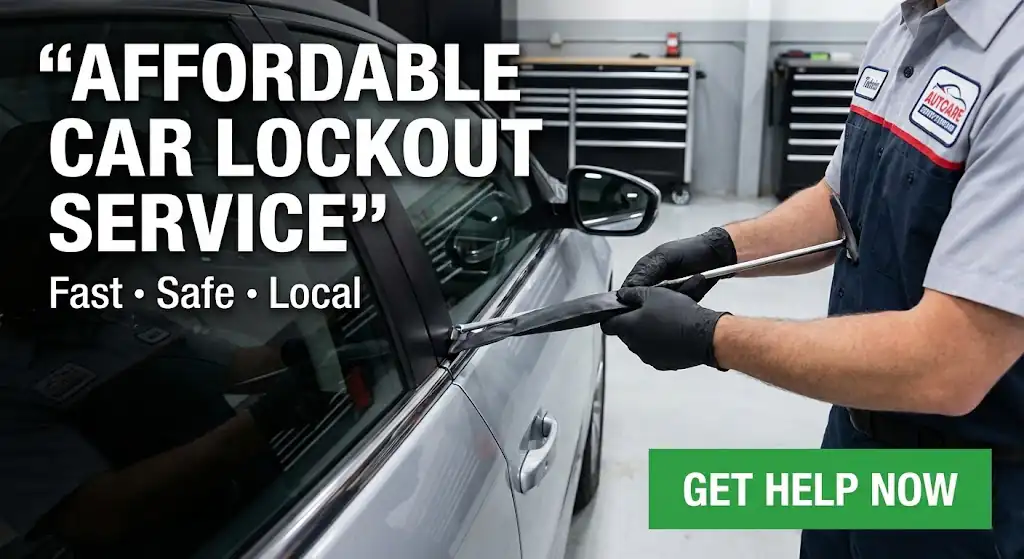
Step 3: Non-destructive entry. Using professional-grade tools — typically an inflatable air wedge to create a tiny gap at the top of the door frame and a long-reach tool to press the unlock button or pull the interior handle — the technician opens the door without scratching paint, bending metal, or damaging seals. The entire process usually takes 2–10 minutes.
Step 4: Verification and entry. Once the door is open, the technician may ask for proof of ownership (driver’s licence, registration, or insurance card) to confirm the vehicle belongs to you. This protects both you and the service provider.
Step 5: Done. You’re back in your car with zero damage. The whole process from call to back inside your vehicle typically takes 30–60 minutes total.
How Much Does a Car Lockout Service Cost in Hamilton?
Car lockout pricing in Hamilton varies based on the time of day, your location, and whether the vehicle requires specialized tools. Here’s what to expect:
Prices are estimates for the Hamilton, Burlington, Waterdown, and Grimsby area. Use our online towing cost estimator for a personalized quote.
💡 Money-Saving Tip: Check your auto insurance policy before paying out of pocket. Many Ontario car insurance policies include roadside assistance that covers car lockouts at no extra charge. Your insurance may also cover towing and other roadside services you didn’t know about.
Car Lockout Service vs. Locksmith: What’s the Difference?
When you search for help after being locked out of your car, you’ll see two types of services: car lockout/roadside assistance companies and auto locksmiths. Understanding the difference helps you choose the right service for your situation:
🚗 Car Lockout / Roadside Service
Specializes in non-destructive door entry using air wedges and long-reach tools. Best for when your keys are visible inside the vehicle, the doors are locked, and you simply need to get back in.
Response time: Usually faster (20–40 min)
Cost: $75–$150
🔐 Auto Locksmith
Specializes in lock picking, key cutting, key fob programming, and ignition repair. Best for when your key is lost or broken (not just locked inside), the lock itself is damaged, or you need a new key cut on-site.
Response time: Varies (30–90 min)
Cost: $100–$300+ (higher for key cutting/programming)
For a standard car lockout where the keys are inside the vehicle, a roadside lockout service is typically faster and more affordable. If the key is genuinely lost, broken inside the lock, or you need key replacement, an auto locksmith is the better choice. Towing Hamilton handles standard lockouts and can refer you to a trusted locksmith partner if key cutting or programming is needed.
Emergency Car Lockout: Children and Pets Locked in a Vehicle
A child or pet locked inside a vehicle is a genuine emergency — especially in summer heat or winter cold. Vehicle interiors can reach lethal temperatures in minutes during Hamilton summers, and hypothermia is a real risk in winter even with the engine off.
🚨 If a Child or Pet Is Locked Inside:
1. Call 911 immediately if the person or animal shows signs of distress, heat exhaustion, or unresponsiveness.
2. Under Ontario’s Provincial Animal Welfare Services Act (PAWS Act), you may be legally justified in breaking a window to rescue an animal in distress — but call 911 or local animal services first if time permits.
3. If you must break a window, choose the one farthest from the child or pet to avoid injury from shattered glass.
4. If the situation is not immediately life-threatening, call for professional lockout service — a technician can often arrive faster than you’d expect and open the door without breaking anything.
When you call Towing Hamilton for a car lockout and mention a child or pet is inside, the call is treated as an emergency with priority dispatch. Our closest available technician is sent immediately.
Common Reasons People Get Locked Out of Their Cars
Understanding why car lockouts happen can help you prevent the next one. These are the most common scenarios Hamilton drivers face:
Auto-lock features that catch you off guard. Many modern vehicles lock all doors automatically after 30–60 seconds or when you walk away with the fob in range and then return without the fob. If you leave the key fob on the seat and step out for a moment, the car may lock itself.
Dead key fob battery. When your key fob battery dies, the car can’t detect the fob inside or nearby. You close the door, and it locks — but the fob can no longer send the unlock signal. This is one of the most common causes of lockouts in vehicles with push-button start and keyless entry.
Leaving keys in the trunk. You pop the trunk to load groceries, set your keys down inside, and close it. Many trunk releases require the fob or the interior button — both now inaccessible.
Child accidentally locking the doors. Kids playing with the lock buttons or key fob can lock the doors while you’re outside the vehicle. This is particularly stressful when the child is too young to understand how to unlock them.
Habit and distraction. Rushing into a store, switching bags at the gym, or taking a phone call while exiting the car — momentary distractions account for the majority of lockouts. It happens to everyone.
Lock malfunctions. Electronic lock actuators can fail, door handles can break, and moisture in cold weather can freeze locks shut. In Hamilton’s winter climate, frozen locks are a regular occurrence — though they’re technically a lock failure, not a “locked out” situation. A de-icer spray in your coat pocket prevents most frozen lock issues.
What to Do If You’re Locked Out in an Unsafe Location
Being locked out of your car in an isolated parking lot, a highway shoulder, or an unfamiliar neighbourhood at night changes the calculus. Personal safety comes first — before worrying about your car or your keys:
Move to a well-lit, populated area if possible. If you’re in a dark parking lot, walk to the nearest open business, gas station, or well-lit area. Don’t stand alone beside your car in an isolated location waiting for help.
If you’re on a highway, stay behind the guardrail. Never stand between your car and oncoming traffic. Call for help and wait well clear of the road. On busy Hamilton highways like the QEW, Highway 403, or the Red Hill Valley Parkway, passing traffic is the biggest immediate threat to your safety.
Call 911 if you feel threatened. A car lockout alone isn’t a police emergency, but if someone is approaching you in a threatening way or you’re in immediate danger, call 911 first. They can also dispatch roadside assistance through Hamilton Police Service.
Let someone know where you are. Text or call a friend or family member with your exact location. Share your live location through your phone if possible.
Be cautious of unsolicited help. Well-meaning strangers may offer to help open your car, but allowing someone to pry at your vehicle with improvised tools often causes damage. Politely decline and wait for the professional service you’ve called. Towing Hamilton’s 24-hour service operates around the clock specifically for situations like these.
Car Lockout in Winter: Frozen Locks and Cold Weather Issues
Hamilton winters add a unique challenge to car lockouts. When temperatures drop below -10°C, physical locks can freeze shut, rubber door seals can bond to the frame, and even electronic locks can malfunction. Here’s how to handle cold-weather lockout situations:
Frozen physical lock cylinder — If your vehicle has a physical key slot, moisture inside the mechanism can freeze overnight. A lock de-icer (available at any Hamilton Canadian Tire or auto parts store) thaws it in seconds. In a pinch, hand sanitizer (which contains alcohol) applied to the key can work. Never pour hot water on a frozen lock — it refreezes quickly and can crack the plastic around the cylinder.
Frozen door seals — Rubber weather stripping along the door frame can freeze to the car body, making the door impossible to pull open even when unlocked. Gently push and pull the door to break the ice seal. Applying silicone-based lubricant or rubber conditioner to door seals before winter prevents this entirely.
Key fob range reduced by cold — Cold temperatures reduce battery output in key fobs, shortening their range. You may need to hold the fob directly against the door handle or driver’s door for it to register.
Preventing winter lockouts: Keep a spare key fob battery in your wallet. Apply rubber conditioner to door seals every October. Store a lock de-icer in your coat pocket (not in the car). Keep your key fob battery fresh — most last 2–3 years and replacement batteries cost under $5.
How to Prevent Getting Locked Out of Your Car
Once you’ve dealt with a car lockout once, you never want it to happen again. These prevention strategies cost little or nothing and save you the frustration and expense of a future lockout:
Get a spare key made and keep it somewhere accessible. Give it to a family member, keep one in your wallet (if it’s a flat emergency key), or use a magnetic key box attached to the vehicle’s undercarriage. A basic key copy costs $5–$15. A spare fob with programming costs $100–$250 — still far cheaper than repeated lockout calls.
Set up your vehicle’s connected app. If your car has a smartphone app with remote unlock capability, set it up now. It takes 10 minutes and could save you hundreds of dollars and hours of waiting.
Develop a “keys check” habit. Before closing any door, pat your pocket or bag to confirm you have your keys. Make it automatic — like checking for your phone and wallet before leaving the house.
Replace key fob batteries proactively. Most fob batteries last 2–3 years. If your fob’s range seems shorter or you need to press the button multiple times, replace the battery immediately — don’t wait for it to die completely.
Disable auto-lock if it causes issues. Many vehicles allow you to disable the auto-lock feature through the settings menu or by visiting a dealership. If your car has a habit of locking itself at inconvenient times, disabling this feature may be worth the trade-off.
Add roadside assistance to your insurance. Most Ontario insurers offer roadside assistance as an add-on for a few dollars per month. It typically covers lockouts, battery boosts, tire changes, fuel delivery, and towing — giving you peace of mind for under $30 per year.
Locked Out of Your Car with the Engine Running
This happens more often than people admit — especially in winter when drivers leave the engine running to warm up. You step out for “just a second” and the door auto-locks behind you. Now the car is running, locked, and potentially in a public location.
Don’t wait for the car to run out of gas. A locked, running vehicle in a parking lot or driveway can idle for hours. Meanwhile, exhaust fumes, fuel waste, and the risk of someone else gaining access to your car (or a curious child climbing in) all increase.
Call for a lockout service immediately. Technicians prioritize running-vehicle lockouts because of the safety and theft risks. The unlocking process is the same whether the engine is on or off — the technician uses non-destructive tools to open the door.
Never leave your car running unattended in Ontario. Section 128 of Ontario’s Highway Traffic Act requires that you take reasonable precautions to prevent your unattended vehicle from moving. While leaving a vehicle running is not specifically prohibited, it can attract thieves and creates safety hazards.
💡 Pro Tip: If you want to warm up your car in winter without risking a lockout, invest in a remote car starter system. They allow you to start the engine with the doors locked and only unlock when you use the key or fob. A quality installed system costs $200–$500 and pays for itself the first time it prevents a lockout — or an early-morning frost scraping session.
What to Do If Your Car Lock or Ignition Is Broken
Sometimes the problem isn’t just a lockout — the lock itself is damaged. A key that turns but won’t unlock the door, a key fob that clicks but nothing happens, or a broken key stuck in the ignition are all situations that go beyond standard car unlocking.
Broken key in the lock or ignition — Do not try to extract it yourself. Needle-nose pliers, tweezers, and superglue attempts usually push the broken piece further in or damage the cylinder. A locksmith has extraction tools designed for this exact situation.
Key turns but the lock doesn’t engage — The internal lock mechanism or actuator has failed. The vehicle may need to be towed to a mechanic for repair. Breakdown towing can get your vehicle to a repair shop where the lock can be serviced.
Electronic lock system failure — If none of the doors respond to the fob and the physical key slot also fails, there may be an electrical issue (dead 12V battery, blown fuse, or failed body control module). A battery boost may restore electronic lock function if the root cause is a dead battery.
Ignition won’t turn even with the correct key — Try wiggling the steering wheel while turning the key — the steering lock can bind against the ignition. If that doesn’t work, the ignition cylinder may need replacement, which requires towing to a mechanic.
Car Lockout FAQ: Common Questions from Hamilton Drivers
How long does it take for a lockout service to arrive in Hamilton?
Most professional lockout services in Hamilton arrive within 20–40 minutes, depending on your location and time of day. Emergency calls involving children or pets locked inside receive priority dispatch and can arrive even faster. Once on-site, the actual unlocking process typically takes 2–10 minutes.
Will a lockout service damage my car?
No. Professional car lockout technicians use specialized air wedges and long-reach tools designed to open doors without scratching paint, bending frames, or damaging seals. When performed correctly, there is zero damage to the vehicle. This is the main advantage over DIY methods, which frequently cause cosmetic and mechanical damage.
Does insurance cover car lockout services in Ontario?
Many Ontario auto insurance policies include roadside assistance that covers car lockouts, often at no additional cost beyond the monthly premium. CAA membership also covers lockouts. Check your insurance policy or call your insurer to confirm before paying out of pocket. Learn more about Ontario insurance and towing coverage.
Can I unlock my car with my phone?
Yes, if your vehicle supports a connected car app. GM (myChevrolet, myGMC, myCadillac), Ford (FordPass), Toyota (Toyota Connected Services), Hyundai (Blue Link), BMW (My BMW), and most other major manufacturers offer apps with remote unlock functionality. The app must be set up and linked to your vehicle before you need it. Some manufacturers charge a monthly subscription for connected services.
How much does it cost to get a locksmith to unlock a car in Hamilton?
A standard car lockout service in Hamilton typically costs $75–$150. An auto locksmith who needs to pick the lock, cut a new key, or program a key fob may charge $100–$300 or more depending on the complexity. After-hours and high-security vehicles cost more than daytime calls on standard vehicles.
Should I call the police if I’m locked out of my car?
In most cases, a car lockout is not a police matter. Hamilton Police Service recommends calling a locksmith or roadside assistance for standard lockouts. However, you should call 911 if a child or pet is locked inside and in distress, if you’re in an unsafe location and feel threatened, or if the lockout happened during a traffic emergency on a highway.
Can a locksmith make a car key on the spot without the original?
Yes. A qualified auto locksmith can create a new physical key using the vehicle’s VIN and lock code. They can also program a new transponder chip key or key fob on-site for most makes and models. This service typically costs $150–$400 depending on the vehicle and key type. High-security keys for luxury vehicles can cost more.
My key fob battery died and I can’t unlock or start my car. What do I do?
Most key fobs contain a hidden physical key blade that slides out from the fob casing — look for a small button or latch on the fob. Use this physical key in the door’s key slot (often hidden behind a cap on the driver’s door handle). To start the car, hold the dead fob directly against the start button — the vehicle has an NFC reader that can detect the fob at extremely close range, even with a dead battery.
Is it legal to break my own car window if I’m locked out?
Breaking your own car window is legal — it’s your property. However, be prepared to prove ownership if bystanders or police respond. Having your driver’s licence with you helps. The bigger question is whether it’s worth it financially — a window replacement costs $200–$600, while a professional lockout service costs $75–$150 and causes zero damage.
How can I avoid getting locked out of my car in the future?
The best prevention strategies include getting a spare key made and giving it to a trusted person, setting up your car’s smartphone app for remote unlocking, replacing your key fob battery every 2 years, developing a “keys check” habit before closing any door, and considering a magnetic key box hidden on your vehicle’s underside. A $10 spare key is the cheapest insurance against a $100+ lockout call.