
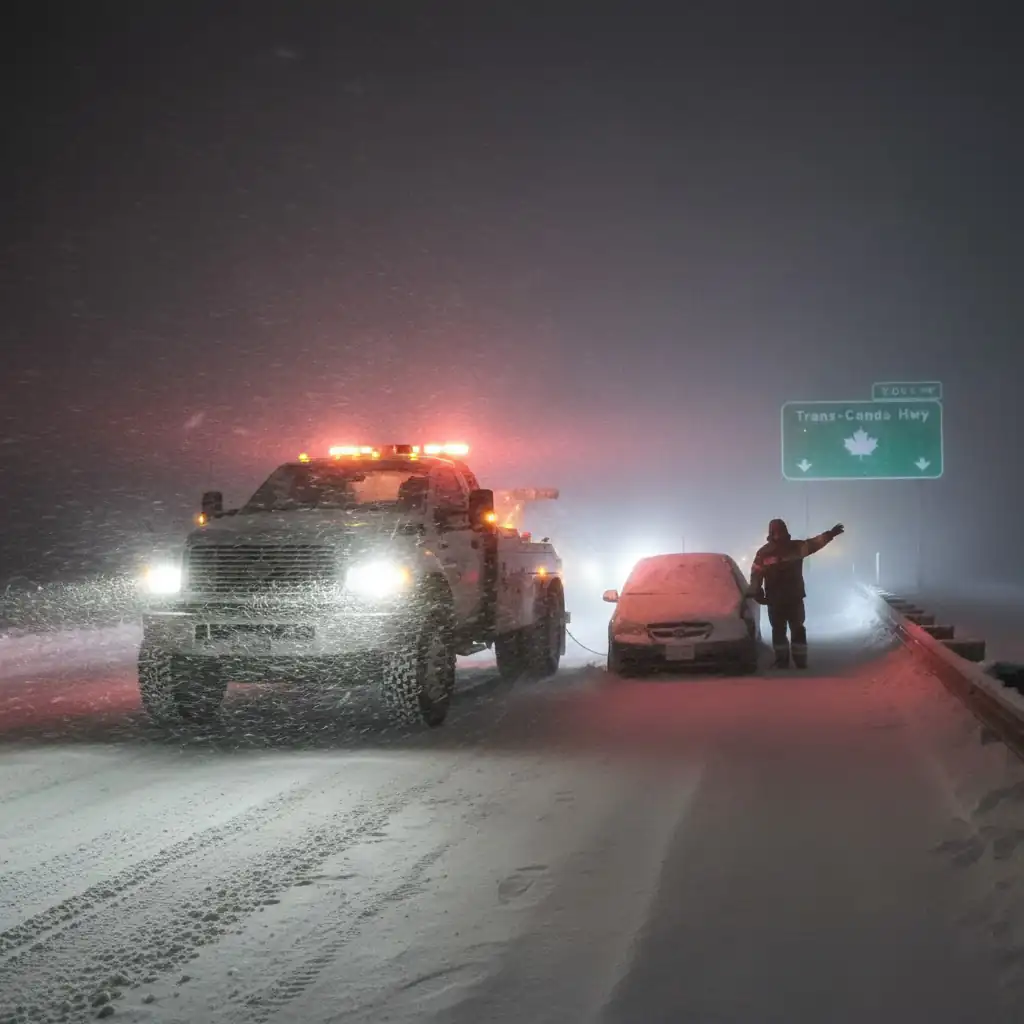
Winter Driving Survival Kit: What Every Hamilton Driver Needs in the Car
❄️ Quick Answer
Every Hamilton driver should keep a winter driving kit in their car from November through April. The essentials: a portable phone charger (your most important survival tool), warm blanket, flashlight with extra batteries, ice scraper and snow brush, small shovel, traction aid (cat litter or sand), jumper cables or a portable jump starter, reflective triangles, first aid kit, and non-perishable snacks and water. Total cost: $75–$150 for everything. This kit could save your life if you’re stranded in a winter breakdown — and every item earns its place when the temperature drops below -15°C on the QEW at midnight.
Hamilton winters don’t play around. Between the lake-effect snow off Lake Ontario, the ice that builds on the Niagara Escarpment access roads, the wind chill that drops temperatures to -25°C and below, and the sheer volume of road salt that eats through brake lines and rocker panels — driving here from November to April demands respect and preparation.
Every winter, Hamilton drivers get stranded — dead batteries at 6 AM, spin-outs into snowbanks on the Linc, flat tires on Highway 403 during a squall, or engine failures that leave them sitting in a freezing car waiting for help. The drivers who handle these situations safely are the ones who prepared in advance. The ones who didn’t are the ones who end up cold, scared, and wishing they’d spent 20 minutes putting together a winter driving kit.
This guide covers everything you need in your car emergency kit for Hamilton winters, organized by category with explanations for why each item matters. We’ll also cover what to do during a winter breakdown, how to stay safe while waiting for help, and when to call for emergency towing. If you’re stranded right now, call Towing Hamilton at (905) 481-0133.
The Complete Winter Driving Kit Checklist
Here’s everything your winter driving kit should contain, organized into four categories. Every item has earned its place through real Hamilton winter driving scenarios:
❄️ Category 1: Survival & Warmth
☐ Warm blanket or sleeping bag — A fleece blanket or compact sleeping bag rated for sub-zero temperatures. Your car loses heat within 30 minutes of the engine shutting off. In -20°C weather, hypothermia can set in within 1–2 hours without insulation.
☐ Extra winter clothing — A pair of warm gloves, a toque, a scarf, and thick socks stored in a bag. If you left home in business clothes, these could be lifesavers. Warm hands are especially important for changing a tire or handling jumper cables.
☐ Hand and body warmers — Chemical heat packs that activate when shaken. They last 6–10 hours and cost about $1 each. Throw 5–10 in your kit and replace them annually.
☐ Non-perishable snacks — Granola bars, nuts, dried fruit, or energy bars. If you’re stranded for hours, your body burns calories fast trying to stay warm. Keep food that won’t freeze solid or go stale over a season.
☐ Bottled water — At least 1 litre. Water bottles may freeze in the trunk, but they’ll thaw quickly once held or placed inside the car. Dehydration accelerates cold-related fatigue.
📱 Category 2: Communication & Visibility
☐ Portable phone charger (power bank) — This is the single most important item in your entire kit. Your phone is how you call for help, share your GPS location, contact family, and find the nearest service. A dead phone in a dead car is a genuine emergency. Keep a charged 10,000+ mAh power bank and a compatible charging cable in your kit year-round. Check the charge monthly.
☐ Flashlight with extra batteries — LED flashlights are brighter and last longer than incandescent. Breakdowns happen in the dark more often than in daylight, and you need light to inspect your car, signal for help, and safely exit the vehicle. Keep lithium batteries — they perform better in extreme cold than alkaline.
☐ Reflective triangles or LED road flares — Place them behind your vehicle to warn approaching traffic. On highways, set them at least 50 metres back. In whiteout conditions, reflective triangles may be the only thing that prevents a rear-end collision with your stopped vehicle.
☐ Reflective safety vest — If you need to exit the vehicle on a highway, a high-visibility vest dramatically increases your chances of being seen by passing drivers. They cost under $10 and fold flat.
☐ Whistle — If you’re off the road, in a ditch, or in a situation where you need to attract attention but can’t see approaching help, a whistle carries much further than your voice — especially in wind.
🔧 Category 3: Vehicle Recovery
☐ Jumper cables or portable jump starter — Dead batteries are the number one winter roadside call in Hamilton. A set of quality jumper cables (at least 4-gauge, 16+ feet) lets a passing Good Samaritan help you. A portable lithium jump starter ($60–$120) lets you boost yourself without needing another car — a major advantage when you’re alone. Read our guide on how to jump start a car battery in Hamilton.
☐ Traction aids — A bag of non-clumping cat litter, coarse sand, or commercial traction grit. Spread it under your drive wheels when stuck on ice. It provides the grip your tires need to get moving. A $5 bag of cat litter has rescued more stuck cars than most people realize.
☐ Compact shovel — A folding or collapsible snow shovel for digging out tires, clearing exhaust pipes, and creating a path. Full-size shovels don’t fit in most trunks — look for a collapsible model designed for cars.
☐ Ice scraper and snow brush — You likely already have one, but confirm it’s in the car and not in the garage. Include a long-handled brush for reaching across the roof — clearing your entire vehicle of snow is a legal requirement in Ontario.
☐ Tow strap or tow rope — A rated tow strap (at least 10,000 lb rating) allows another vehicle to pull you out of a snowbank or shallow ditch. Not a substitute for professional winching and recovery, but can solve minor stuck situations.
🩹 Category 4: Safety & First Aid
☐ First aid kit — A basic kit with adhesive bandages, gauze, antiseptic wipes, medical tape, and pain relievers. Pre-assembled car first aid kits are available at any pharmacy for $15–$25. Check the expiration dates annually.
☐ Prescription medications — If you take daily medication, keep a 1–2 day emergency supply in your kit. Being stranded overnight without essential medication can create a health emergency on top of a vehicle emergency.
☐ Windshield washer fluid — A spare jug of winter-rated washer fluid (-40°C). Salt spray from winter roads can coat your windshield in minutes, and running out of washer fluid in a snowstorm is a visibility emergency.
☐ Duct tape and zip ties — Temporary fixes for loose bumper covers, broken mirrors, cracked hoses, or securing items. They won’t replace a mechanic, but they can get you to one.
☐ Small bag of basic tools — A multi-tool or pliers, a flathead and Phillips screwdriver, and an adjustable wrench handle most minor roadside fixes. Keep them in a zippered pouch to prevent rattling.
Total Cost: How Much Does a Winter Driving Kit Cost?
The entire kit costs less than a single tow — and significantly less than a hospital visit from a cold-exposure incident. Here’s a realistic budget breakdown:
For context: a single battery boost call costs $75–$125, a roadside tire change costs $75–$150, and a winch-out from a snowbank costs $100–$250. A portable jump starter alone can save you the price of multiple boost calls over its lifetime. The entire kit pays for itself the first time you use any single item.
What to Do During a Winter Breakdown
Your car just died in -15°C on the Red Hill Valley Parkway. Here’s exactly what to do, in order:
1. Pull off the road and turn on hazard lights. Coast to the shoulder as far right as possible. If the engine is dead, you’ll lose power steering and power brakes — steer firmly and brake harder than normal. Hazards run off the battery and will stay on even with the engine off.
2. Stay inside the vehicle. Your car — even without heat — is shelter from the wind. Wind chill at -15°C with a 30 km/h wind feels like -25°C or colder on exposed skin. Staying inside also protects you from traffic. Only exit if the vehicle is in a dangerous position or on fire.
3. Call for help. Call Towing Hamilton at (905) 481-0133, your insurance roadside line, or CAA. Give them your exact location — use your phone’s GPS. If you’re in a dangerous spot or feel unsafe, call 911. For a complete breakdown of who to call and what to expect, see our guide on what happens when you call a tow truck.
4. Conserve heat. Put on the extra clothing from your kit. Wrap yourself in the blanket. Use body warmers. If there are passengers, huddling conserves body heat. Minimize opening doors — every door opening lets out trapped warm air.
5. Conserve phone battery. Turn off Wi-Fi, Bluetooth, and unnecessary apps. Reduce screen brightness. You need enough charge to communicate with the tow truck driver when they arrive. Plug into your portable charger if the battery is below 30%.
6. Set up visibility aids. If it’s safe to briefly exit the vehicle, place reflective triangles behind your car. In snow or fog, visibility drops dramatically — and a stopped vehicle on a highway shoulder is a collision risk. Return to the car immediately after placing them.
🚨 Carbon Monoxide Warning: If you’re running the engine intermittently for heat (10 minutes on, 10 minutes off to conserve fuel), make sure the exhaust pipe is clear of snow. A blocked exhaust pipe causes carbon monoxide to fill the cabin — which is odourless, invisible, and lethal. Step outside briefly and visually confirm the tailpipe is unobstructed every time you restart the engine. Crack a window slightly when the engine is running for extra ventilation.
The #1 Item Most People Forget: A Portable Phone Charger
If you only add one item to your car this winter, make it a portable phone charger (power bank). Here’s why it’s more important than everything else combined:
Your phone is your lifeline. It’s how you call for help, share your GPS location with the tow dispatcher, contact family, check weather conditions, and access roadside assistance apps.
Cold kills batteries fast. Lithium-ion phone batteries lose 20–30% of their capacity in extreme cold. A phone that showed 40% when you left work may be at 15% by the time you’re stranded on the QEW. In -20°C, a phone can shut down entirely with battery remaining.
No phone = no call for help. Without a working phone, your only option is to wait and hope someone stops — or to walk, which is dangerous on highways. A $25 power bank eliminates this risk entirely.
What to buy: A 10,000 mAh power bank provides 2–3 full charges for most smartphones. Keep it in the glove box (not the trunk — the cabin stays warmer). Check its charge once a month and top it up. Major brands like Anker, RAVPower, and Belkin are reliable and affordable ($20–$35).
Hamilton-Specific Winter Driving Hazards
Hamilton’s geography and climate create winter driving conditions that are unique in Ontario. Your winter driving kit needs to account for these local hazards:
Escarpment access roads. The Claremont Access, Jolley Cut, Beckett Drive, and other mountain accesses are steep, narrow, and notoriously icy. Vehicles regularly slide off these roads during freezing rain and snow events. A bag of traction grit and a shovel can mean the difference between getting moving again and waiting hours for a winch-out.
Lake-effect snow squalls. Proximity to Lake Ontario means Hamilton and Burlington can experience sudden, intense snowfall that reduces visibility to near zero. These squalls can dump 10–20 cm in an hour in localized areas. Reflective triangles and a good flashlight are critical when visibility drops.
The Linc and Red Hill Valley Parkway. These elevated, exposed expressways are particularly vulnerable to wind, ice buildup, and whiteout conditions. Breakdowns here involve highway-speed traffic and limited shoulder width. Your emergency kit’s visibility aids are essential on these corridors.
QEW corridor. The QEW between Hamilton and Burlington/Niagara is one of the busiest highways in Ontario. Winter accidents and breakdowns here can leave you stranded in heavy traffic or on a narrow shoulder. Wind off the lake makes exposure particularly harsh along this stretch.
Rural areas south and west of the city. Dundas, Ancaster, Flamborough, and the southern mountain areas have more rural roads with less traffic and longer wait times for service. If you regularly drive these areas, your kit becomes even more important — help may take longer to arrive, and you need to be self-sufficient for a longer period.
Stranded in a Winter Breakdown?
Battery boost • Tire change • Winch-out • Towing — 24/7 even in the worst conditions.
(905) 481-0133
Pre-Winter Vehicle Maintenance: Prevent the Breakdown in the First Place
A winter driving kit prepares you for emergencies, but the best strategy is preventing breakdowns entirely. Before Hamilton’s first major snowfall (typically late November), take care of these maintenance items:
Test your battery. A battery that barely starts your car in October will fail in December. Most auto parts stores and mechanics offer free battery testing. If your battery is 3+ years old, test it before winter — replacement costs $150–$250, far less than being stranded. For warning signs, see our guide on 5 signs your car battery is about to die.
Install winter tires. Ontario doesn’t legally require winter tires, but they reduce stopping distances on ice by 25–50% and dramatically improve traction. Most Ontario insurance companies offer a 3–5% premium discount for winter tires. Install them by mid-November and remove them by mid-April. Transport Canada’s winter driving guide recommends winter tires for all Canadian drivers. Learn what to do if you get a flat tire in Hamilton.
Check your coolant/antifreeze. Engine coolant must be rated for the temperatures your region experiences. In Hamilton, that means protection to at least -35°C. A coolant hydrometer ($5 at Canadian Tire) tests the freeze point in seconds.
Top up windshield washer fluid. Use winter-rated fluid (-40°C). Standard summer washer fluid will freeze on your windshield and completely obscure your vision. Keep a spare jug in the trunk.
Check all lights. With shorter days and longer dark hours, working headlights, tail lights, brake lights, and turn signals are critical. Replace burnt bulbs before winter — it’s a 5-minute job on most cars.
Keep your fuel tank above a quarter. Running low on fuel in winter increases the risk of fuel line freezing (moisture condenses in the empty space above the fuel) and leaves you without heat if you’re stranded. Make a habit of filling up at a quarter tank. For what happens when the tank hits empty, see what to do when you run out of gas.
Stuck in Snow? How to Get Your Car Out Without a Tow
Before calling for a tow or winch-out, try these techniques — many minor stuck situations can be resolved with your kit and some patience:
Clear snow from around all four tires. Use your shovel to remove as much snow as possible from in front of and behind the drive wheels. Also clear any snow buildup under the car that the chassis may be resting on.
Spread traction material. Pour cat litter, sand, or gravel directly in front of (or behind, depending on which direction you’re trying to move) the drive wheels. This gives the tires something to grip besides ice.
Rock the vehicle gently. Shift between drive and reverse in short, gentle bursts — don’t floor it. Each forward-backward cycle builds a little more momentum. Aggressive throttle just digs the tires deeper and creates polished ice ruts.
Turn off traction control (briefly). Counter-intuitively, turning off traction control can help when stuck. Traction control cuts power when it detects wheelspin — which is exactly what you sometimes need to rock out of a snow rut. Turn it back on immediately once you’re free.
Use floor mats as an emergency traction surface. If you don’t have cat litter, placing your rubber floor mats directly under the drive wheels provides temporary traction on ice. You may damage the mats, but that’s a small price for getting unstuck.
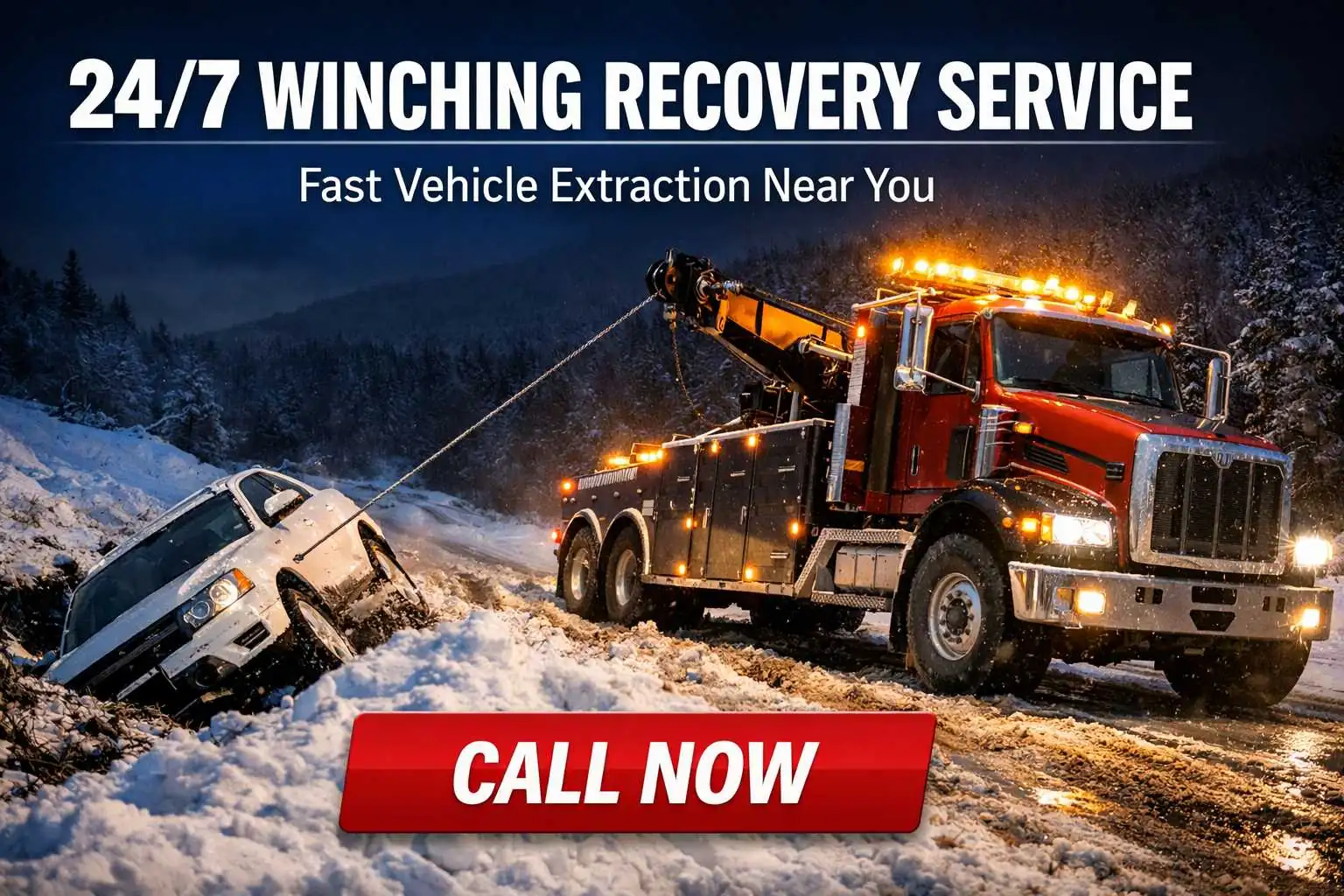
Know when to stop and call for help. If the vehicle is stuck in a ditch, on an embankment, or high-centred on a snowbank where the wheels are off the ground, DIY recovery won’t work — you need professional winching and recovery. Continued spinning just digs you deeper. Call (905) 481-0133 and let a truck with a winch handle it.
Portable Jump Starters vs. Jumper Cables: Which Is Better?
Dead batteries are the #1 roadside call in Hamilton winters. Both jumper cables and portable jump starters can solve the problem — but they work differently:
🔌 Jumper Cables
Cost: $25–$50
Requires: A second vehicle with a good battery
Pros: Never runs out of charge, reliable for decades, works on any vehicle size
Cons: Useless without another car, requires some know-how to connect safely
🔋 Portable Jump Starter
Cost: $60–$120
Requires: Nothing — works independently
Pros: Self-sufficient (no second car needed), compact, often includes USB charging ports and LED light
Cons: Must be kept charged, may struggle in extreme cold if stored in trunk, limited number of boosts per charge
💡 Our Recommendation: If you can afford it, carry both. The portable jump starter handles the 90% scenario (you’re alone with a dead battery). The cables handle the 10% scenario (the jump starter is dead or the battery needs more power than a portable unit can deliver). If you can only choose one, get the portable jump starter — self-sufficiency is worth the extra cost. For everything you need to know about boosting, see our guide on how to jump start a car battery.
Kit Maintenance: Keep It Ready Year After Year
A winter driving kit that you assembled three years ago and never checked may not work when you need it. Spend 15 minutes each October running through this maintenance checklist:
☐ Charge the portable phone charger and verify it holds a full charge.
☐ Charge the portable jump starter (if you have one) and test it.
☐ Test the flashlight and replace the batteries with fresh lithium cells.
☐ Replace hand/body warmers — they have a shelf life of 3–5 years but are cheap enough to replace annually.
☐ Replace snacks and water — check expiration dates and swap for fresh supplies.
☐ Check first aid kit — replace anything used or expired.
☐ Confirm the blanket is clean and dry — a musty, damp blanket is unpleasant and less effective.
☐ Top up the washer fluid with winter-rated (-40°C) fluid.
☐ Verify that everything is in the car — not in the garage, basement, or house.
Winter Driving Kit for Families: Extra Items When You Have Kids
If you regularly drive with children in Hamilton’s winter, add these items to your kit:
Extra blankets — one per child, plus a spare. Children lose body heat faster than adults.
Child-friendly snacks — crackers, apple sauce pouches, or other foods your kids will actually eat. Hungry, cold children are stressed children.
Diapers and wipes — if applicable. Being stranded with a toddler and no diapers is a scenario worth preventing.
A small activity or toy — a colouring book and crayons, a small toy, or a tablet with downloaded content helps keep children calm during an extended wait.
Any medications your child needs — inhalers, allergy medication, or other prescriptions.
When the Kit Isn’t Enough: When to Call for Professional Help
A winter driving kit helps you survive and handle minor issues. But some situations require professional roadside assistance or emergency towing:
Dead battery that won’t respond to a jump. If your portable jump starter and/or jumper cables can’t get the engine started after several attempts, the battery may be completely dead or the issue is the alternator, starter, or another electrical component. Call for a professional battery boost — if that doesn’t work, you’ll need a tow.
Stuck in a ditch or off the road. If you’ve slid off the road, into a ditch, or onto an embankment, do not try to drive out aggressively — you risk digging deeper or rolling the vehicle. Professional winching and recovery is the safe solution.
Flat tire with no spare or in unsafe conditions. Modern vehicles increasingly ship without spare tires — just tire sealant kits that don’t work on large punctures or sidewall damage. If you don’t have a usable spare, or if changing the tire would put you in danger (on a narrow highway shoulder in a snowstorm), call for a roadside tire change or a tow.
Engine failure or mechanical breakdown. If the engine won’t start and it’s not a battery issue, or if the vehicle stalled while driving and won’t restart, you need a tow. No amount of kit supplies fixes a blown head gasket or a failed timing belt.
After an accident. If you’ve been in a collision, your vehicle needs professional accident towing — preferably on a flatbed to prevent further damage during transport.
For a comprehensive look at what happens when you need professional help, read our guide on what happens when you call a tow truck. And for cost guidance, use the Towing Hamilton cost estimator to see pricing before you call.
Save This Number Before Winter: Your One-Call Solution
Your winter driving kit handles the physical side of being prepared. The other half is knowing exactly who to call the moment something goes wrong. Save (905) 481-0133 in your phone contacts right now — before you need it.
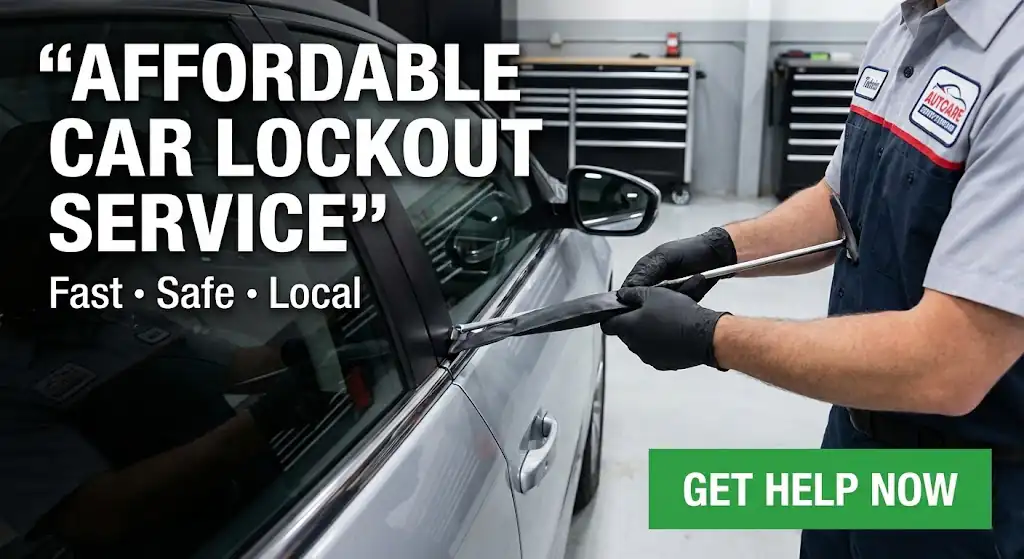
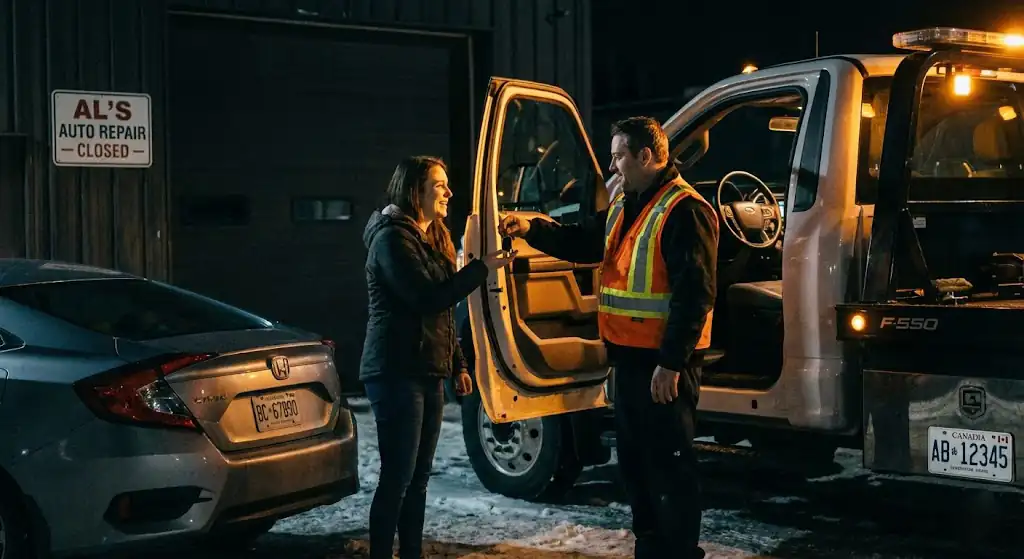
Towing Hamilton operates 24 hours a day, 7 days a week — including during snowstorms, cold snaps, and holiday weekends when other services may be overwhelmed. One call handles everything: battery boosts, tire changes, winch-outs, fuel delivery, lockouts, and flatbed towing across Hamilton, Burlington, Waterdown, and Grimsby.
Check your coverage before winter too. If your auto insurance includes roadside assistance, know the phone number and your plan limits. If you have CAA, confirm your membership tier. And read our guide on what roadside assistance actually covers so you know exactly what’s included.
Winter Driving Kit FAQ
What should I keep in my car for winter emergencies?
The essentials for a winter car emergency kit include: a portable phone charger, warm blanket, flashlight with lithium batteries, ice scraper and snow brush, collapsible shovel, traction aid (cat litter or sand), jumper cables or portable jump starter, reflective triangles, first aid kit, hand warmers, non-perishable snacks, and bottled water. The total cost is roughly $75–$150 and the kit should be assembled by mid-November and maintained annually.
How much does a winter car emergency kit cost?
A complete winter driving kit costs approximately $75–$150 depending on whether you choose jumper cables ($25–$50) or a portable jump starter ($60–$120). Individual items like cat litter ($5), a flashlight ($10–$20), and a blanket ($10–$25) are very affordable. The entire kit costs less than a single roadside service call and is a one-time investment with minimal annual replacement costs for snacks, water, and hand warmers.
What is the most important item in a winter car kit?
A portable phone charger (power bank). Your phone is how you call for help, share your GPS location, contact family, and access information. Cold temperatures drain phone batteries 20–30% faster than normal, and a dead phone in a dead car is a genuine emergency. A 10,000+ mAh power bank costs $20–$35 and provides 2–3 full phone charges — making it the single most impactful item in your kit.
How do I get my car unstuck from snow?
Clear snow from around all four tires with a shovel, then spread cat litter or sand directly in front of the drive wheels for traction. Gently rock the vehicle between drive and reverse — don’t floor the accelerator. Turn off traction control briefly if needed. Floor mats can serve as emergency traction surfaces under the tires. If the vehicle is in a ditch or high-centred, stop trying and call for professional winching — continued spinning makes it worse.
Should I stay in my car if I break down in winter?
Yes — especially on highways and busy roads. Your vehicle is shelter from the wind and cold, and it’s significantly safer than standing on a highway shoulder where passing traffic may not see you. The only exceptions: if your vehicle is on fire, in immediate danger of being hit, or in a position where you can safely move behind a guardrail or barrier. If you must run the engine for heat, keep the exhaust pipe clear of snow to prevent carbon monoxide buildup.
Is a portable jump starter worth buying?
Yes. A portable lithium jump starter ($60–$120) is one of the best investments a Hamilton driver can make. Dead batteries are the number one roadside call in winter, and a portable starter lets you boost yourself without needing another vehicle. Many models also include USB ports for phone charging and LED flashlights. The cost is recovered the first time you avoid a $75–$125 battery boost service call.
How cold does Hamilton get in winter?
Hamilton’s average January low is -8°C, but temperatures regularly drop to -15°C to -20°C during cold snaps, with wind chill pushing the “feels like” temperature to -25°C to -35°C. The lake-effect from Lake Ontario can produce sudden, intense snow squalls. The Hamilton escarpment creates local weather variations — conditions on the mountain can be significantly worse than at lake level. According to Environment Canada’s climate data, Hamilton receives an average of 110 cm of snow annually.
When should I put together my winter driving kit?
Assemble or refresh your kit by mid-November — before Hamilton’s first significant snowfall. Many winter emergencies happen during the first major cold snap or storm, when drivers haven’t prepared yet. Do a maintenance check each October: charge the power bank and jump starter, replace batteries in the flashlight, swap expired snacks and water, and verify everything is actually in the car and not in your garage.
Does cat litter really help on ice?
Yes — non-clumping clay cat litter is an effective and inexpensive traction aid. Spread it directly under and in front of the drive wheels on ice or packed snow. The granules create friction between the tire and the ice surface, giving the tires enough grip to get moving. Coarse sand or commercial traction grit works similarly. A 9 kg bag costs about $5 and can get you out of multiple stuck situations per winter.
Can I run my engine for heat while stranded?
Yes, but with caution. Run the engine for 10–15 minutes at a time to warm the cabin, then turn it off for 10–15 minutes to conserve fuel. Before each restart, exit the vehicle briefly and check that the exhaust pipe is completely clear of snow — a blocked exhaust pipe forces carbon monoxide into the cabin, which is odourless and lethal. Crack a window slightly while the engine is running for additional ventilation.
Save This Number for Winter. ❄️
Battery boost • Tire change • Winch-out • Fuel delivery • Towing
Hamilton, Burlington, Waterdown & Grimsby — 24/7, every winter storm.
(905) 481-0133