
What Roadside Assistance Actually Includes (And When You Need It)
🛣️ Quick Answer
Roadside assistance is a service that helps you when your vehicle breaks down or becomes undriveable away from home. Standard coverage typically includes towing, battery boost / jump start, flat tire change, fuel delivery, car lockout service, and winch-out / stuck vehicle recovery. You can get roadside assistance through your auto insurance (often included or available as an add-on for $5–$15/month), through a membership like CAA ($80–$180/year), or by calling a towing company directly and paying per-service. In Hamilton, per-service emergency road service typically costs $75–$200 depending on what’s needed.
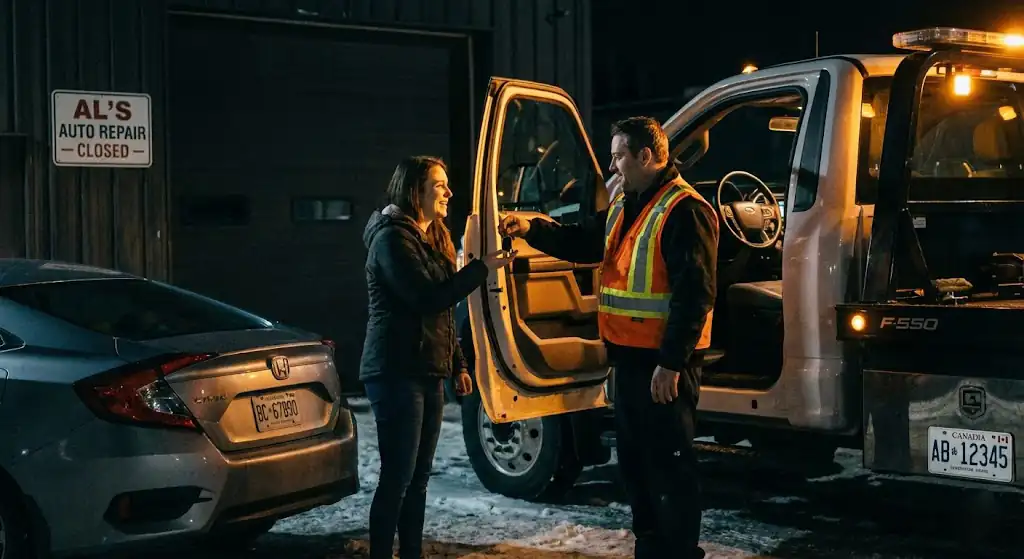
Everyone has heard of roadside assistance — but most drivers don’t actually know what it covers until the moment they need it. That’s a problem, because being stranded on the side of a highway at 11 PM in January is the worst possible time to discover that your plan doesn’t cover what you thought it did, or that you don’t have any coverage at all.
The term “roadside assistance” gets used loosely — by insurance companies, by CAA, by towing companies, and by car manufacturers — and each one means something slightly different. Some plans cover unlimited towing, while others cap you at 10 km. Some include emergency road service like fuel delivery and lockout help, while others only cover a basic tow.
This guide breaks down exactly what roadside assistance typically includes, the different ways to get it in Ontario, what it costs, and when it makes sense to call a professional roadside service in Hamilton directly — even if you already have a plan.
What Does Roadside Assistance Actually Cover?
While coverage varies by provider, most roadside assistance plans — whether through insurance, CAA, or a manufacturer — include these six core services:
1. Emergency Towing
If your vehicle can’t be driven — whether from a mechanical breakdown, accident, or any other reason — roadside assistance covers towing to the nearest repair facility, your home, or a destination of your choice (within plan limits). Most plans cover towing within a set distance, typically 10–200 km depending on the provider and plan tier. Emergency towing is the most-used roadside assistance service.
2. Battery Boost / Jump Start
A dead battery is the single most common reason for roadside assistance calls — especially in Ontario winters. A technician arrives with a professional jump starter and attempts to start your vehicle on-site. If the battery is beyond saving, they can tow you to a shop for replacement. Battery boost service is typically included in all plan tiers.
3. Flat Tire Change
If you have a flat tire and a usable spare, a technician will swap the flat for your spare on-site. If you don’t have a spare, they’ll tow the vehicle to the nearest tire shop. Most plans cover the labour but not the cost of a new tire. Read our complete guide on what to do when you get a flat tire in Hamilton.
4. Emergency Fuel Delivery
Ran out of gas? A roadside technician brings enough fuel to get you to the nearest gas station — typically 5–10 litres. Some plans include the cost of the fuel, others charge for the fuel itself but waive the service fee. Fuel delivery service is available around the clock in Hamilton.
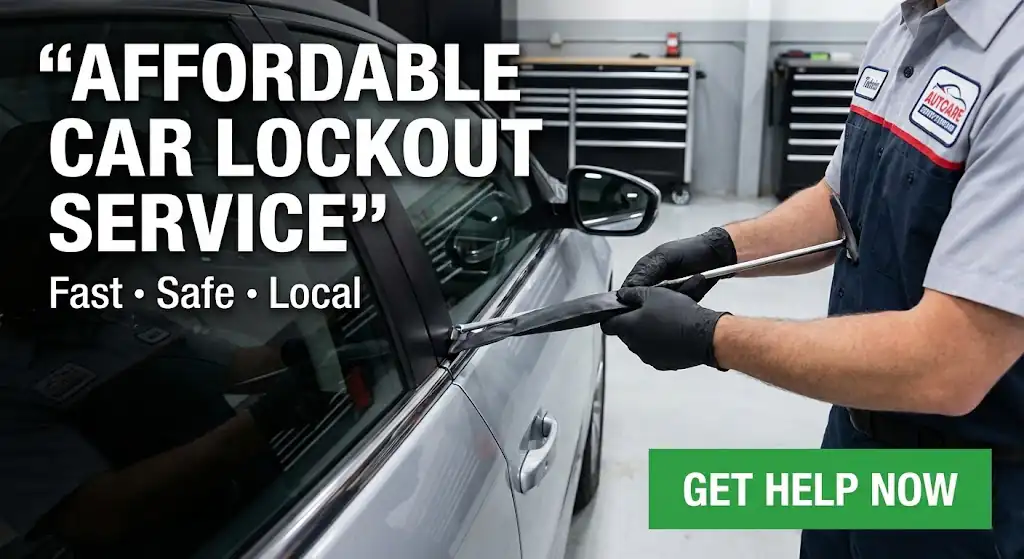
5. Car Lockout Service
Locked your keys in the car? A technician uses non-destructive tools to open your door without damage. Most plans cover the door-opening service but not key cutting or replacement if the key is lost or broken. For more detail, see our full guide on car lockout service in Hamilton.
6. Winch-Out / Stuck Vehicle Recovery
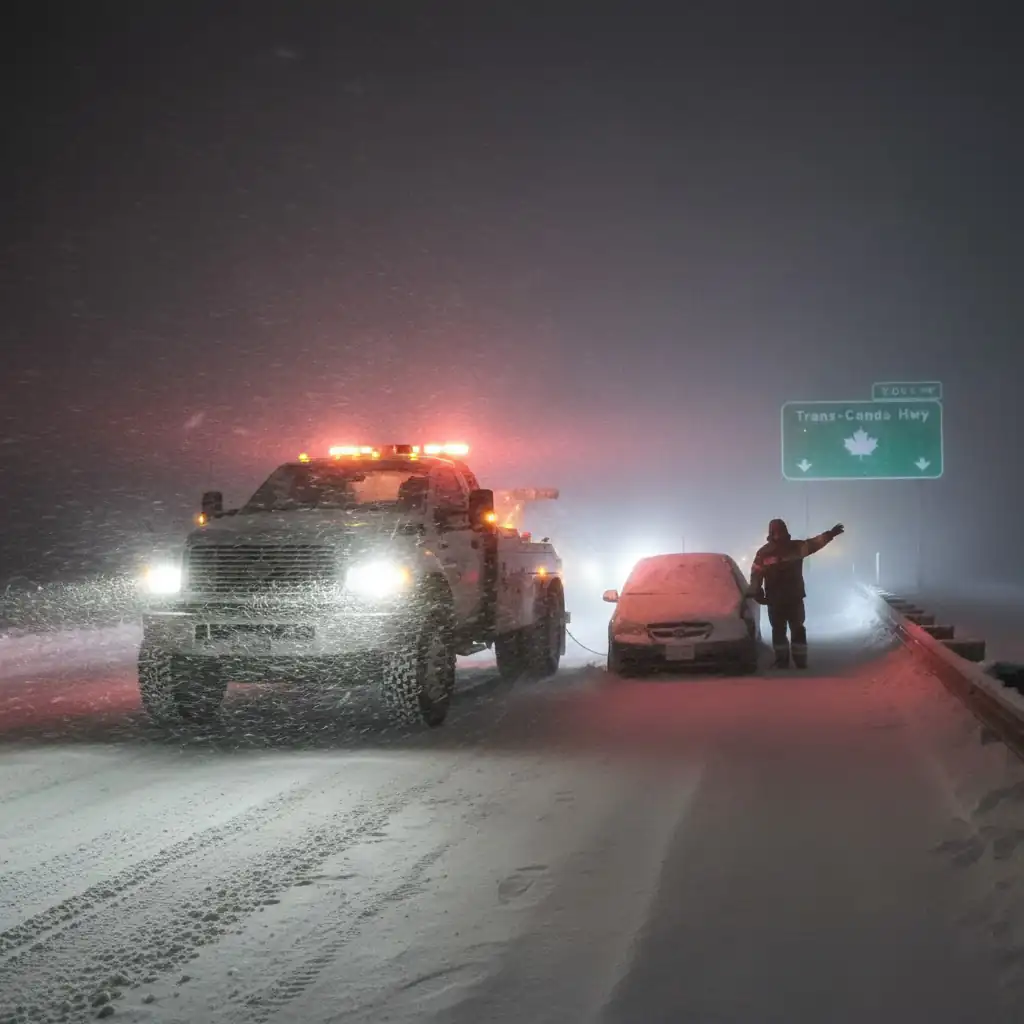
If your vehicle is stuck in a ditch, snowbank, mud, or off the road, a winch-out service uses cables and a motorized winch to pull it back onto the road. This is different from standard towing and is especially common during Hamilton winters. Winching and recovery service is included in most mid-tier and premium plans.
Three Ways to Get Roadside Assistance in Ontario
Ontario drivers have three main options for roadside assistance coverage. Each works differently and has distinct advantages depending on your needs:
💡 Key Difference: Insurance-based roadside assistance covers the specific vehicle on the policy. CAA membership covers you as a person — meaning you’re covered even when riding in someone else’s car, driving a rental, or borrowing a friend’s vehicle. Pay-per-service has no coverage limits or restrictions at all — you simply call and pay for what you need.
Roadside Assistance Through Your Car Insurance (Ontario)
Many Ontario auto insurance policies include roadside assistance as an optional add-on — and some include it automatically at higher coverage tiers. Here’s what you need to know:
Cost: Typically $5–$15/month ($60–$180/year) as an add-on to your existing policy. Some insurers include it free with comprehensive coverage packages.
What’s usually covered: Towing (to the nearest repair facility), battery boost, flat tire change with your spare, lockout assistance, and emergency fuel delivery.
What’s usually NOT covered: Towing to a destination of your choice (many only cover towing to the nearest shop), winch-out/off-road recovery, more than 3–4 calls per year, or commercial vehicles.
How it works: You call your insurer’s 24-hour roadside line. They dispatch a third-party towing company to your location. Wait times can vary significantly depending on demand and your location — during peak times (winter mornings, holiday weekends), waits of 60–90 minutes are common.
Important caveat: Some insurance-based roadside plans only reimburse you after the fact — meaning you pay the tow company directly and submit a claim for reimbursement later. Read your policy carefully to understand whether it’s a dispatch service or a reimbursement model.
For a detailed breakdown of what Ontario auto insurance covers for towing, read our guide on whether car insurance covers towing in Ontario.
CAA Roadside Assistance: What Each Tier Covers
CAA (Canadian Automobile Association) is the most recognized roadside assistance provider in Ontario. They offer three membership tiers, each with different coverage levels:
Note: CAA tier names, pricing, and specific coverage details may vary by region and are subject to change. Verify current details at caasco.com for Southern Ontario or caaneo.ca for Northern and Eastern Ontario.
⚠️ Important CAA Limitation: CAA Basic tier includes only 10 km of towing. In Hamilton, that might barely get you from the QEW to a nearby mechanic — but not from Waterdown to a specific shop on the Hamilton mountain. If you regularly drive on highways, Plus or Premier tier is significantly more practical.
Pay-Per-Service Roadside Assistance: Calling a Towing Company Directly
The third option — and often the fastest — is to call a towing and roadside service company directly and pay for the specific service you need. This approach makes sense in several situations:
You don’t have any plan. Not everyone has insurance-based roadside assistance or a CAA membership. Calling directly is your only option — and it’s a perfectly good one.
You’ve used up your annual service calls. Most plans limit you to 3–4 calls per year. If you’ve already used yours, direct-pay is the answer for the rest of the year.
Wait times through your plan are too long. During peak demand — cold snaps, ice storms, holiday weekends — insurance and CAA dispatch can have wait times exceeding 90 minutes. A local company like Towing Hamilton typically arrives in 20–45 minutes because we’re already in the area.
You need a specific destination. Plans often only tow to the “nearest qualified repair facility.” If you want your vehicle taken to a specific mechanic across town or to your home, direct-pay lets you choose.
You need specialized service. Heavy-duty towing, motorcycle towing, or vehicle recovery from ditches and embankments often isn’t covered — or is only partially covered — by basic plans.
Use our online cost estimator to see what direct-pay roadside service costs for your specific situation in Hamilton.
Need Roadside Help Right Now?
Battery boost • Tire change • Lockout • Fuel delivery • Towing — all in one call.
(905) 481-0133
How Much Does Roadside Assistance Cost in Hamilton?
If you’re paying per-service without a plan, here’s what individual roadside assistance services typically cost in the Hamilton, Burlington, Waterdown, and Grimsby area:
Prices are estimates for the Hamilton area. After-hours and holiday calls may cost more. Get a personalized estimate at towinghamilton.ca/towing-cost-estimator.
What Roadside Assistance Does NOT Cover
Understanding the limits of your coverage is just as important as knowing what’s included. Most roadside assistance plans do NOT cover the following:
✖ On-site mechanical repairs — Roadside assistance gets you to a shop; it doesn’t fix your engine on the highway.
✖ Parts and materials — A new battery, replacement tire, or fuel itself are usually at your expense (the service call is covered, the parts are not).
✖ Chronic or recurring issues — If you need a jump start every week because of a bad alternator, most plans will cut you off and recommend a mechanic.
✖ Commercial vehicles — Most consumer plans exclude vehicles used for business, delivery, or ride-share. Commercial towing is a separate, specialized service.
✖ Heavy-duty vehicles, RVs, or trailers — Standard plans cover passenger vehicles. Larger vehicles require heavy-duty towing services.
✖ Off-road recovery beyond basic winch-out — A vehicle stuck deep in a muddy field or down an embankment may require specialized recovery equipment not covered by basic plans.
✖ Towing beyond plan distance limits — Extra kilometres are billed at per-km rates, which can add up quickly on long-distance tows.
✖ Accident-related towing in some plans — Some insurance roadside add-ons exclude collision towing, which is handled separately under your collision coverage. Check your policy wording carefully.
When to Use Your Plan vs. Call a Towing Company Directly
Having roadside assistance doesn’t always mean using it is your best option. Here’s a practical decision framework:
✅ Use Your Plan When:
You have calls remaining for the year, you’re in a safe location and can wait 45–90 minutes, you need a simple service (boost, tire change, lockout), and the nearest repair shop is an acceptable destination for towing. This is the cost-effective choice — you’ve already paid for it.
📞 Call Directly When:
You’re in an unsafe location and need faster response, you want to choose the tow destination, you’ve used your annual service calls, you need specialized service (heavy-duty, motorcycle, long-distance), or wait times through your plan are unacceptably long. The per-call cost is worth the faster response and flexibility.
Many drivers don’t realize they can call a towing company directly, pay out of pocket, and then submit the receipt to their insurance for partial or full reimbursement. Check your policy for “proof of loss” or “reimbursement” provisions — this gives you the speed of direct-call service with the cost savings of your plan.
Manufacturer Roadside Assistance: What Comes with Your New Car
Many drivers don’t realize that their new or certified pre-owned vehicle may already include complimentary roadside assistance from the manufacturer. These plans are typically active for 3–5 years from the original purchase date and cover most standard roadside emergencies.
Major manufacturers offering complimentary programs include Toyota (3 years), Honda (3 years), Hyundai (5 years), Kia (5 years), Ford (5 years), GM/Chevrolet (5 years with OnStar), BMW (4 years), Mercedes-Benz (4 years), and most other brands.
What’s typically covered: Towing, battery service, flat tire, lockout, and fuel delivery — similar to what insurance and CAA provide.
How to use it: Call the manufacturer’s 24-hour roadside assistance number (found in your owner’s manual, on the manufacturer’s app, or on a card in your glove box). Some newer vehicles with connected services (OnStar, Toyota Connected, BMW Assist) allow you to request roadside help directly through the vehicle’s built-in system or smartphone app.
Important: Manufacturer coverage usually expires with the warranty period. Once it lapses, you need insurance-based coverage, CAA, or direct-pay service as a replacement. Check your owner’s manual or call your dealer to confirm whether your manufacturer coverage is still active.
Roadside Emergencies That Need More Than Standard Assistance
Standard roadside assistance handles the common breakdowns. But some situations require specialized services that go beyond what basic plans cover:
Accident recovery — After a collision, you may need accident towing with a flatbed to prevent further damage to a vehicle with suspension, frame, or wheel damage.
Vehicles stuck in deep snow, mud, or off-road — A basic winch-out might not be enough. Severe situations may require a heavy-duty wrecker and specialized winching and recovery equipment.
Towing over long distances — If you break down on a road trip and need your vehicle towed back to Hamilton, basic plans won’t cover the full distance. Long-distance towing requires specific arrangements and per-km pricing.
Motorcycle breakdowns — Motorcycles require flatbed towing and specific tie-down equipment. Most standard roadside plans either exclude motorcycles or charge extra.
Multiple issues at once — A dead battery AND a flat tire, or a lockout with a dead battery — these compound situations happen more often than you’d think. A single service call from Towing Hamilton can address multiple issues in one visit, saving you from calling twice.
How to Prepare for a Roadside Emergency Before It Happens
The best time to figure out your roadside assistance plan is right now — not when you’re standing in the rain next to a dead car. Here’s a quick preparation checklist:
Check what you already have. Call your auto insurance company and ask whether your policy includes roadside assistance. Check your vehicle’s owner’s manual for manufacturer coverage. Look through your credit card benefits — some premium cards include roadside service.
Understand your coverage limits. Know how many service calls per year you get, what the towing distance limit is, and whether your plan covers all the services you might need.
Save the phone numbers you’ll need. Store your insurer’s roadside number, CAA’s number (if you’re a member), and a local towing company’s number in your phone contacts. In Hamilton, save (905) 481-0133 for Towing Hamilton.
Keep an emergency kit in your car. Include a portable phone charger (your phone is your lifeline), flashlight, reflective vest, warm blanket (for winter), bottled water, and basic first aid supplies.
Maintain your vehicle. Regular maintenance prevents the majority of breakdowns. Follow your manufacturer’s service schedule, check tire pressure monthly, test your battery before winter, and keep your fuel tank above a quarter full — especially in cold weather, when low fuel increases the risk of fuel line freezing.
For more details on what to keep in your car, check out our complete guide on battery warning signs every driver should know — catching a failing battery early is the easiest way to avoid a roadside emergency entirely.
Your Rights When Using Roadside Assistance in Ontario
Ontario’s Towing and Storage Safety and Enforcement Act (TSSEA), in effect since January 1, 2024, protects you regardless of how you access roadside assistance. Whether the tow truck is sent through your insurance, CAA, or a direct call, the operator must follow the same rules: proper TSSEA certification, documented consent, maximum published rates, itemized invoices, and the most direct route to your chosen destination.
One notable exception: the TSSEA’s consent and invoicing requirements are relaxed for membership-type services (like CAA) and roadside assistance contracts where consent terms are pre-established through the membership agreement. This means your CAA driver won’t make you sign a separate consent form at the scene — your membership already covers that.
For a complete breakdown of your legal protections, read our in-depth guide on your towing rights in Ontario under the TSSEA.
Roadside Assistance FAQ
What does roadside assistance include?
Standard roadside assistance typically includes six core services: emergency towing, battery boost or jump start, flat tire change, emergency fuel delivery, car lockout service, and winch-out or stuck vehicle recovery. The specific limits and terms vary by provider and plan tier, so check your coverage details to understand exactly what’s included and what has restrictions.
Is roadside assistance worth the cost?
If you use it even once per year, it typically pays for itself. A single battery boost or tire change call costs $75–$150 out of pocket in Hamilton, while annual coverage through insurance costs $60–$180. For drivers with older vehicles, long commutes, or those who drive in harsh winter conditions, the peace of mind alone makes it worthwhile.
How long does roadside assistance take to arrive?
Response times vary significantly by provider, location, time of day, and demand. Insurance and CAA dispatches typically arrive within 30–90 minutes under normal conditions, but can exceed 2 hours during peak demand (cold snaps, storms, holidays). A local towing company called directly in Hamilton usually arrives within 20–45 minutes because they’re already operating in the area.
Does my car insurance include roadside assistance in Ontario?
It depends on your policy. Some Ontario insurers include roadside assistance in comprehensive packages automatically, while others offer it as an optional add-on for $5–$15/month. Contact your insurer directly to find out. Common providers that offer it include Intact, Aviva, Economical, Wawanesa, and Desjardins. Our guide on insurance and towing coverage in Ontario covers this in detail.
Can I call a tow company directly instead of using my plan?
Yes. You can always call a towing company directly, regardless of whether you have a plan. This is often faster, gives you more control over the destination, and allows you to handle situations your plan doesn’t cover. Some insurance policies will reimburse you after the fact if you submit the receipt — check your policy for reimbursement provisions.
What’s the difference between CAA Basic and CAA Plus?
The biggest difference is towing distance. CAA Basic covers towing up to 10 km — enough to reach the nearest repair facility but not enough to choose your destination across town. CAA Plus covers up to 200 km of towing, which gives you far more flexibility and is especially important for highway breakdowns or when you want your vehicle taken to a specific mechanic.
Does roadside assistance cover me in someone else’s car?
It depends on the type of coverage. Insurance-based roadside assistance follows the insured vehicle — so it only works when the covered car breaks down, regardless of who’s driving. CAA membership follows the member — meaning you’re covered in any car you’re riding in, including rentals, borrowed vehicles, and even as a passenger. This is one of CAA’s major advantages over insurance-based plans.
How many times can I use roadside assistance per year?
Most plans limit you to 3–4 service calls per year. CAA allows 4 calls per year across all membership tiers. Insurance add-ons vary by provider — some limit calls while others limit total annual dollar amounts. If you’ve used up your annual calls, you can still call a towing company directly on a per-service basis.
Does my credit card include roadside assistance?
Some premium credit cards in Canada include complimentary roadside assistance as a cardholder benefit. Cards like the Scotiabank Gold American Express, CIBC Aventura Visa Infinite, and certain TD and BMO cards may include this perk. Check your card’s benefit guide or call your credit card company to confirm — many cardholders have coverage they’re completely unaware of.
What should I do if roadside assistance wait time is too long?
If you’re in an unsafe location and your plan’s estimated arrival time is unacceptably long, call a local towing company directly for faster service. In Hamilton, Towing Hamilton’s roadside assistance team typically arrives within 20–45 minutes. Keep the receipt — many insurance policies will reimburse reasonable towing costs even when you arrange service independently.
Roadside Emergency? One Call Handles Everything.
Towing • Battery Boost • Tire Change • Lockout • Fuel Delivery • Winch-Out
Hamilton, Burlington, Waterdown & Grimsby — 24 hours, 7 days a week.
(905) 481-0133