
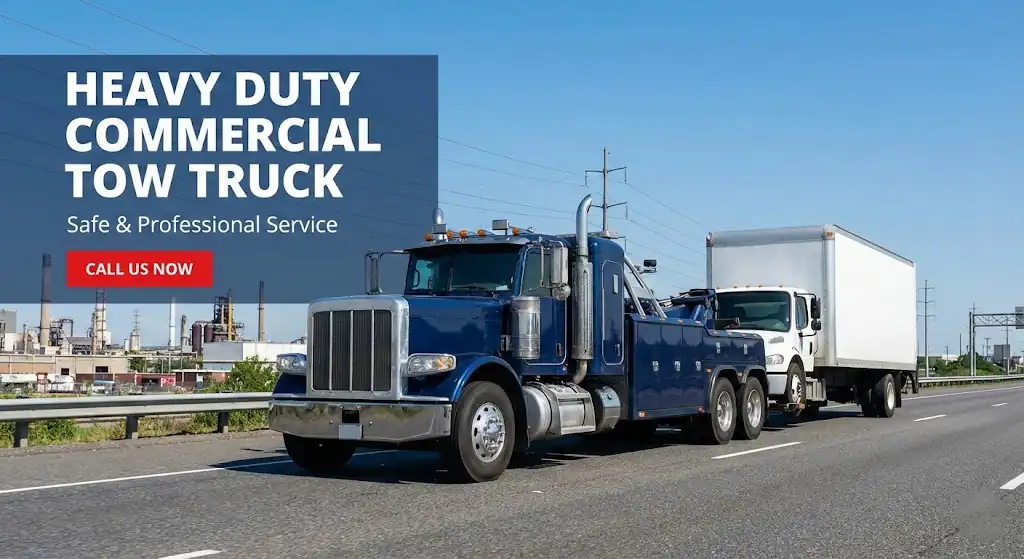
Underground Parking Towing: How Tow Trucks Fit in Tight Spaces
It’s a question property managers ask more than you’d think: “Can a tow truck even get into our parking garage?” The answer is yes — but it requires the right company with the right equipment. Most tow trucks you see on the highway are far too tall, too wide, or too long to operate underground. Sending a standard truck into a low-clearance garage is a recipe for a stuck tow truck on top of whatever problem you called about.
Underground parking towing is a specialized service that sits at the intersection of commercial property management and technical towing expertise. It’s needed for parking enforcement (unauthorized vehicles in reserved or visitor spots), vehicle breakdowns that leave a car blocking traffic in a garage, accident recovery in confined spaces, and removing abandoned or inoperable vehicles that accumulate over time.
This guide explains how tow trucks operate in parking garages, what equipment is used, what challenges exist, and what property managers need to know to set up effective underground parking enforcement. If you manage a building in Hamilton and need a vehicle removed from underground parking right now, call Towing Hamilton’s commercial service at (905) 481-0133.
Why Standard Tow Trucks Can’t Operate Underground
To understand underground towing, you first need to understand why the tow trucks you normally see on the road won’t work in a parking garage:
3.0–3.8m
Standard Flatbed Height
❌ Too tall for any garage
2.4–2.8m
Standard Wheel-Lift Height
⚠️ Too tall for most garages
1.8–2.1m
Low-Profile Tow Truck
✅ Fits most underground garages
0.3m
Go-Jack Height (per unit)
✅ Fits under any vehicle
Most underground parking garages in Hamilton have a posted clearance of 1.8 to 2.4 metres — regulated under the Ontario Building Code — but the actual usable clearance is often lower due to hanging pipes, sprinkler heads, lighting fixtures, cable trays, and ventilation ducts. A posted 2.1-metre clearance might have a duct at 1.9 metres in the back corner where the vehicle is parked.
Beyond height, underground garages present width constraints (narrow lanes, tight pillars), turning radius limitations (sharp 90° ramp turns designed for passenger cars, not trucks), ramp grades (steep entry and exit angles that can ground out a truck’s undercarriage), gate and barrier systems, and floor load limits in some older structures. A company that sends a standard truck without checking these dimensions first is a company that will waste your time — or damage your garage.
The Equipment: How Tow Trucks Operate in Parking Garages
Professional underground towing uses three main types of equipment, each suited to different garage configurations:
The Challenges of Towing in Underground Garages
Beyond clearance, underground garages present a unique set of operational challenges that require experience and planning:
Tight turning radii. Parking garage ramps and internal lanes are designed for passenger cars making slow, careful turns. A tow truck — even a compact one — has a significantly larger turning radius. Operators must map the route in advance and confirm the truck can navigate every turn, especially on spiral ramps and between support columns.
Low-hanging obstructions. Even if the posted clearance is 2.1 metres, pipes, sprinkler heads, lighting fixtures, security cameras, and ventilation ducts often hang lower in specific areas. An operator unfamiliar with the garage may clip these obstructions — damaging both the truck and the building infrastructure. Experienced operators walk the route first before driving in.
Ramp grade and transitions. Garage ramps can have grades of 12–15% — steep enough to ground out a truck’s undercarriage at the transition between the ramp and the flat garage floor. Low-clearance trucks with short overhangs are designed for this, but standard trucks will scrape or get stuck at the transition point.
Gate and barrier systems. Most underground garages use access gates, fob readers, or boom barriers. The tow operator needs access — either through a fob provided by the property manager, a temporary access code, or manual override by building security. This coordination should be arranged in advance for enforcement contracts.
Vehicle positioning. The target vehicle may be in a corner spot, between two pillars, with other vehicles parked tightly on both sides, or nose-in against a wall. The operator needs to move the vehicle out of its spot before they can hook it up — and in many cases, adjacent vehicles must be considered to avoid contact. Go-jacks excel in these tight scenarios because they allow multidirectional movement.
Noise and resident disruption. Underground towing in residential buildings often happens during early morning or late evening hours when violations are most apparent. A diesel tow truck idling underground creates noise and fumes that travel through the concrete structure. Experienced operators minimize engine idling and work efficiently to reduce disruption to residents.
AWD vehicles require extra care. Even underground, the same drivetrain rules apply — AWD vehicles cannot have two wheels dragged on the ground. If the underground vehicle is AWD, the operator must use go-jacks on all four wheels or bring it to ground level on go-jacks before loading onto a flatbed outside.
Common Reasons for Underground Parking Towing in Hamilton
Property managers across Hamilton request underground towing for these recurring situations:
Unauthorized vehicles in assigned spots. The most common call. Non-residents park in tenant-assigned spots, or tenants park in spots assigned to other residents. This is the bread and butter of underground enforcement — and the reason proper parking signage and enforcement contracts exist.
Visitor spot abuse. Visitor parking spots in condos and apartments are meant for short-term use. Vehicles that overstay the posted time limit (typically 24–72 hours) take up spots that other visitors need. Time-limited signage with enforcement authority is the solution.
Abandoned or inoperable vehicles. Vehicles that haven’t moved in weeks or months — flat tires, expired plates, visible damage, dust accumulation — take up valuable parking spots and can create safety or environmental hazards (leaking fluids, attracting pests). These removals typically require go-jacks since the vehicle likely can’t be placed in neutral or steered.
Fire lane and emergency access violations. Vehicles blocking fire lanes, emergency exits, or standpipe connections underground are immediate safety hazards. These are typically towed without warning because the violation poses a direct risk. Hamilton Fire Services can also issue fines for fire lane violations on private property.
Post-breakdown removal. A vehicle that broke down inside the garage — dead battery, mechanical failure, flat tire — may need towing to a mechanic. The owner calls for service, but the standard emergency towing truck can’t fit underground. This is when the owner discovers they need an underground-capable towing company.
Accident recovery. Minor collisions happen in underground garages — backing into pillars, sideswipes in tight lanes, contact with walls. If the vehicle is undriveable, it needs to be removed from the garage without causing further damage to the vehicle or the structure. A careful accident towing approach is essential underground.
How Much Does Underground Parking Towing Cost?
Underground parking towing costs more than standard surface towing because of the specialized equipment, additional labour, and extra time required. Here’s what to expect:
Pricing varies by garage complexity, vehicle position, and method required. All charges must comply with TSSEA-published maximum rates. Use the online cost estimator for a personalized quote.
💡 For Property Managers: Enforcement tow costs are billed to the vehicle owner, not the property. Your towing contract should clearly specify the rates that will be charged so there are no surprises for anyone. The property’s tow-away signage must include the towing company’s name and phone number so the vehicle owner can locate and retrieve their car. For full signage and setup details, see our guide on private parking towing rules in Hamilton.
For Property Managers: Setting Up Underground Enforcement
If you manage a building with underground parking in Hamilton, here’s how to establish an effective enforcement program that works within the physical constraints of your garage:
Measure your actual clearances. Don’t rely on the posted clearance alone. Walk the entire garage with a tape measure and note the lowest point at every turn, transition, and section — including hanging pipes, sprinkler heads, and ductwork. Provide these measurements to your towing partner so they can determine which equipment is appropriate.
Map the access route. Identify the path from the garage entrance to the most difficult-to-reach spots. Note the turning radii at each corner, the ramp grade, any speed bumps (height and spacing), gate locations, and the narrowest points. A good towing partner will want to do a walkthrough before the first enforcement call.
Install compliant signage. Every vehicle entrance to the garage needs a tow-away warning sign with the towing company’s name and phone number. Inside the garage, individual “Reserved — Unauthorized Vehicles Towed” signs on specific spots reinforce the message. All signage requirements from the TSSEA apply underground just as they do above ground.
Partner with an underground-capable towing company. This is the critical step. Not every towing company has low-profile trucks or go-jack equipment. Verify that your towing partner has actually operated in underground garages before — ask for references from other Hamilton buildings they service. Towing Hamilton has the equipment and experience for underground parking enforcement across Hamilton’s residential and commercial buildings.
Establish an access protocol. How does the tow operator enter the garage? Options include a dedicated key fob, a temporary access code, a call to the superintendent or security desk, or an intercom system. For enforcement contracts with regular calls, a dedicated fob is the most practical solution — it eliminates delays and allows 24/7 access without requiring staff to be present.
Document every enforcement action. Require photos of the vehicle in its position, the garage signage, and the specific violation before removal. This documentation protects the property if the vehicle owner disputes the tow. A professional towing partner handles this documentation as standard procedure.
For Vehicle Owners: Your Car Was Towed from Underground Parking
If you’ve returned to an underground garage to find your car gone, here’s what to do and what rights you have:
Check the garage signage. Look for the tow-away sign at the garage entrance — it should display the towing company’s name and phone number. Call that number to confirm your vehicle’s location and the hours you can retrieve it.
Retrieve your car as soon as possible. Storage charges accrue daily. The faster you act, the less you pay. Same-day retrieval typically costs $150–$300 total. Waiting a week could add $200–$500+ in storage fees alone.
Know your rights. You can access personal belongings at no charge. You must receive an itemized invoice. You can pay by cash, debit, credit card, or cheque. Charges cannot exceed the operator’s TSSEA-published maximum rates. These protections apply regardless of whether the tow was from surface parking or underground.
Check whether the tow was justified. Was there a visible tow-away sign at the entrance you used? Did it include the towing company’s contact information? Were you actually in violation of the posted restriction? If the signage was missing, obscured, or non-compliant, you may have grounds to dispute the tow — see our guide on private parking towing rules and your rights.
File a complaint if necessary. If you believe the tow was unjustified or the charges were excessive, file a complaint through the Ontario consumer complaint portal. Photograph all signage (or its absence) immediately — this evidence is critical for any dispute.
Electric Vehicles in Underground Garages: Special Towing Considerations
As EV ownership grows in Hamilton, more electric vehicles are parked underground — and they present unique towing challenges:
No wheel dragging — ever. EVs must have all four wheels off the ground during any movement. In an underground garage where a flatbed can’t enter, go-jacks on all four wheels are the only safe method. A low-profile wheel-lift that drags two wheels can damage the electric motor just as severely underground as it would on the street.
Vehicle weight. Electric vehicles are significantly heavier than equivalent gasoline cars due to battery weight. A Tesla Model Y weighs approximately 2,000 kg — about 300 kg more than a comparable gas-powered SUV. Go-jack equipment must be rated for the vehicle’s weight, and operators must account for the extra effort required to move the vehicle manually on go-jacks up a garage ramp.
Transport mode. Many EVs have a “Transport Mode” or “Tow Mode” in their settings that disables the parking brake and allows the vehicle to roll freely. However, this requires access to the vehicle’s touchscreen — which requires the key fob or the owner’s authorization. For enforcement tows where the owner isn’t present, go-jacks bypass this requirement entirely by lifting the wheels off the ground.
For a comprehensive guide to EV and drivetrain-specific towing requirements, see our post on how your drivetrain changes how you get towed and flatbed vs. wheel-lift towing.
Hamilton’s Underground Parking Landscape
Hamilton’s building boom over the past decade has dramatically increased the number of underground parking structures in the city, creating steady demand for underground-capable towing services:
Downtown condominiums. The condo development wave along James Street North, King William, Barton-Tiffany, and the West Harbour has added thousands of underground parking spots to the city. Most new condos have multi-level underground garages with assigned tenant spots, visitor parking, and enforcement needs.
Apartment high-rises. Hamilton’s established apartment buildings along Main Street, King Street, and the mountain feature underground parking that’s decades old — often with lower clearances, tighter turns, and less modern infrastructure than newer builds. These older garages present the most challenging towing environments and often require go-jack extraction rather than truck entry.
Commercial plazas and office buildings. Underground parking beneath commercial buildings on Upper James, the Meadowlands area, and Burlington Street serves employees and customers. Enforcement here typically involves time-limited parking for customers and permit-only areas for tenants and staff.
McMaster University area. The density of student housing near McMaster creates constant parking pressure. Underground garages in the Westdale and Ainslie Wood neighbourhoods frequently deal with unauthorized student parking — students seeking to avoid campus parking fees by parking in nearby residential building garages.
Hospital and medical centre garages. Parking structures at Hamilton Health Sciences, St. Joseph’s Healthcare, and medical centres across the city have their own enforcement challenges — time-limited patient parking that turns over frequently, and unauthorized long-term parking by staff or visitors from adjacent buildings.
Preventing Damage During Underground Towing
Both the vehicle and the parking structure are at risk during underground towing if it’s done carelessly. Here’s how professional operators minimize damage:
Pre-operation walkthrough. Before any equipment enters the garage, a professional operator walks the route from entrance to vehicle, noting clearance, obstructions, turn points, and any tight spots. This adds 5–10 minutes but prevents costly mistakes.
Spotter assistance. On tight turns and low-clearance sections, one team member walks ahead of the truck or go-jack operation, guiding the operator through the space and watching for overhead obstructions. This is standard practice for professional underground operators.
Protective padding. When moving a vehicle on go-jacks past other parked vehicles in tight quarters, some operators place protective padding or blankets on adjacent vehicles to prevent contact damage. This is especially important in premium condominiums where neighboring vehicles may be high-value.
Slow speed, zero rushing. Underground towing takes longer than surface towing — and it should. An operator who rushes through an underground extraction is an operator who scratches vehicles, clips sprinkler heads, and damages garage walls. Time invested in careful operation saves thousands in damage liability.
Photo documentation. Professional operators photograph the vehicle and surrounding area before and after the tow. This protects the tow company, the property, and the vehicle owner by establishing a clear record of the vehicle’s condition before it was moved. If damage is alleged later, the photos provide objective evidence.
Underground Towing for Breakdowns: Not Just Enforcement
Underground parking towing isn’t only about enforcement. Vehicle owners themselves regularly need underground towing for breakdown situations:
Dead battery in the garage. An underground battery boost is often possible without a tow truck — a technician walks down with a portable jump starter. But if the battery is beyond saving and the vehicle needs to go to a shop, underground towing is required.
Flat tire with no spare. If you don’t have a spare or the tire sealant kit failed, and the car is underground where a standard tow truck can’t reach, go-jacks can move the vehicle to surface level for a tire service or flatbed loading.
Mechanical failure. Vehicles that won’t start due to alternator failure, fuel pump issues, or electrical problems need extraction and towing to a mechanic. The vehicle may not be able to be placed in neutral — requiring go-jack extraction.
Moving a stored vehicle. Snowbirds returning in spring sometimes find that a vehicle stored underground all winter won’t start. Or a vehicle sold or donated needs to be removed from a garage by a buyer who can’t drive it out. In these cases, 24-hour towing service with underground capability is the answer.
How to Choose a Towing Company for Underground Parking
Not every towing company can handle underground work. When evaluating an operator for underground parking towing — whether for a single breakdown or an ongoing enforcement contract — verify these specifics:
Ask about their underground equipment. Do they own low-profile trucks? What’s the truck’s maximum height? Do they have go-jacks? What’s the maximum vehicle weight their go-jacks can handle? If they hesitate on these questions, they likely don’t have the equipment.
Ask for building references. A company experienced in underground towing will have references from other Hamilton buildings they service. Ask for names and contact numbers — then actually call them.
Verify TSSEA certification. The same certification requirements apply underground as anywhere else. An uncertified operator performing enforcement tows exposes the property to legal liability. Check our guide on choosing a towing company you can trust for the full vetting checklist.
Request a garage walkthrough. Before signing an enforcement contract, have the towing company visit your garage in person. They should measure clearances, assess access routes, identify problem areas, and confirm which equipment they’ll use. A company that commits to a contract without seeing the garage first is making promises they may not be able to keep.
Confirm insurance coverage. Underground operations have higher risk of incidental damage (to the vehicle, adjacent vehicles, or garage infrastructure). Verify that the towing company carries adequate commercial liability insurance that specifically covers underground parking operations.
For comprehensive pricing estimates for any towing need, use the Towing Hamilton cost estimator or call (905) 481-0133 for a customized quote based on your building’s specific garage dimensions and needs.
Underground Parking Towing FAQ
Can a tow truck fit in an underground parking garage?
Standard tow trucks cannot — a flatbed stands 3.0–3.8 metres tall and a regular wheel-lift is 2.4–2.8 metres. However, specialized low-profile wheel-lift trucks (1.8–2.1 metres tall) can fit in most underground garages. For extremely tight garages, hydraulic go-jacks are used instead — these slide under the vehicle’s wheels at just 30 cm high and require no truck entry at all. The right method depends on your specific garage’s clearance, turning radius, and layout.
How much does it cost to tow a car from underground parking?
Underground towing in Hamilton typically costs $175–$300 for a low-profile truck extraction, or $200–$400 for a go-jack extraction (which requires more labour). If the vehicle also needs to be transported to a mechanic or storage facility after extraction, the total can reach $250–$450. Enforcement tows billed to the vehicle owner are typically $150–$250 plus daily storage. All charges must comply with TSSEA-published maximum rates.
What are go-jacks and how do they work?
Go-jacks are low-profile hydraulic platforms that slide under a vehicle’s wheels and lift them enough to roll freely in any direction — including sideways. A set of four lifts all wheels, allowing the vehicle to be pushed or pulled by hand or with a powered winch to any location. They’re used when no tow truck can physically enter the space — tight garages, narrow aisles, or corners that trucks can’t navigate. Go-jacks can handle vehicles weighing up to 2,500–3,500 kg depending on the model.
Can an EV be towed from underground parking?
Yes, but it must be done with all four wheels off the ground — meaning go-jacks are required since a flatbed can’t enter most garages. Electric vehicles cannot have their drive wheels dragged on the ground at any point, even for short distances inside a garage. The EV is moved on go-jacks to ground level, then loaded onto a flatbed truck waiting at the surface. Some EVs have a “Transport Mode” that facilitates this process, but it requires key fob access.
I’m a property manager — how do I set up underground enforcement?
First, measure your garage’s actual clearances and document the access route. Install compliant tow-away signage at every vehicle entrance with the towing company’s contact information. Partner with a TSSEA-certified towing company that owns low-profile and go-jack equipment — verify with a garage walkthrough before signing a contract. Establish an access protocol (fob, code, or security coordination) and require photo documentation of every enforcement action. Towing Hamilton provides full setup guidance for underground enforcement programs.
My car broke down in underground parking — can a tow truck reach it?
A standard tow truck cannot, but a low-profile truck or go-jacks can. When calling for service, tell the dispatcher your vehicle is underground and provide the garage’s approximate clearance height. If you’re unsure, describe the building — the dispatcher can often determine the garage type. For dead batteries, a technician with a portable jump starter may be able to walk in and boost your car without any towing equipment at all. Call Towing Hamilton at (905) 481-0133 and mention that your vehicle is in an underground garage.
What clearance does a low-profile tow truck need?
Most low-profile tow trucks require a minimum of 2.0 metres of usable clearance — though some compact models can operate in spaces as low as 1.85 metres. “Usable clearance” means the actual lowest point in the garage, not the posted clearance — hanging pipes, sprinkler heads, and ductwork often reduce the real clearance below the posted number. If your garage has sections below 1.8 metres, go-jacks are the only practical method.
Do the same towing rules and rights apply underground?
Yes. All TSSEA requirements apply to underground towing just as they do to surface towing: operator certification, published maximum rates, itemized invoices, multiple payment methods, and for enforcement tows, proper signage with tow-away warnings and the towing company’s contact information. The Trespass to Property Act’s requirements for private property towing also apply equally underground. Your rights as a vehicle owner do not change based on whether the tow occurs above or below ground.
Can the tow operator damage my car with go-jacks?
When used correctly by a trained operator, go-jacks are very safe — they contact only the tire and the area directly under it, with no contact to the body, bumper, or undercarriage. However, any towing equipment can cause damage if used improperly. An inexperienced operator might place go-jacks incorrectly or move the vehicle into adjacent cars or pillars in tight spaces. This is why partnering with an experienced underground towing company — one that photographs the vehicle before and after — is important.
Why does underground towing cost more than regular towing?
Underground towing requires specialized equipment (low-profile trucks or go-jacks that most companies don’t own), more labour time (extraction from tight spaces takes longer), additional personnel (a spotter is often needed), and higher operator expertise. The physical constraints of underground garages — low ceilings, tight turns, adjacent vehicles, limited manoeuvring space — mean the job simply takes more time, skill, and care than hooking up a vehicle on a surface street. The premium reflects the additional investment required to do it safely.