How to Choose a Towing Company You Can Trust in Hamilton
🏆 Quick Answer
The best way to find a trusted, affordable towing company in Hamilton is to research before you need one. Look for a company with a valid TSSEA provincial certificate, published pricing you can review online, 24/7 availability, Google reviews from real Hamilton customers, a fleet that includes flatbed towing, and transparent payment options (cash, debit, and credit card). Avoid any towing company that demands cash only, refuses to show credentials, won’t give you a price estimate upfront, or shows up uninvited at an accident scene. In Hamilton, expect to pay $85–$175 for a standard local tow.
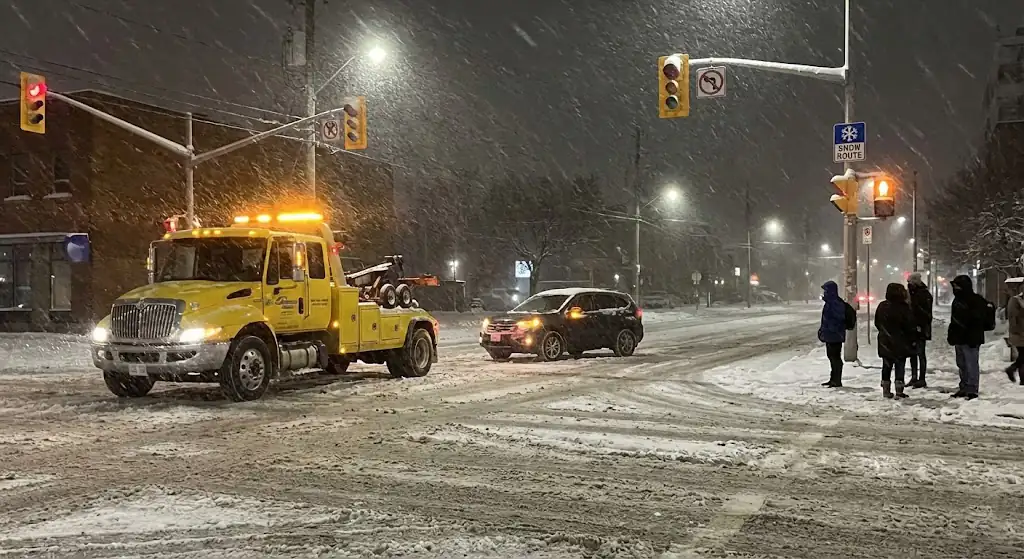
Nobody plans to need a tow truck. When it happens — a flat tire on the QEW, a dead battery at Limeridge Mall, a collision on Main Street — you’re stressed, stranded, and under pressure to make a fast decision about who to call. That pressure is exactly what predatory tow operators count on.
The difference between a trustworthy towing company and a bad one isn’t always obvious from the outside. Both have trucks, both have drivers, and both will tow your car. But one will charge you a fair, transparent price and deliver your vehicle safely to the destination you choose. The other might overcharge you by hundreds of dollars, take your car to a storage yard across town, and hold it until you pay up.
This guide gives you a clear framework for choosing a towing company you can trust — ideally before you need one. We’ll cover what to look for, what to avoid, how Ontario’s new towing laws protect you, and how to tell the difference between affordable towing and dangerously cheap towing that will cost you more in the end.
The 10 Things to Check Before Hiring a Towing Company
Whether you’re researching towing companies in advance or evaluating one that just showed up at the scene, use this checklist to assess whether they’re worth your trust and money:
✅ 1. Valid TSSEA Provincial Certificate
Since January 1, 2024, every tow operator and tow truck driver in Ontario must hold a provincial certificate under the Towing and Storage Safety and Enforcement Act (TSSEA). The operator’s name and certificate number must be displayed on every tow truck. If a company can’t produce a certificate or there’s no number visible on the truck — walk away. For a full breakdown of what the TSSEA means for you, read our guide on your towing rights in Ontario.
✅ 2. Published, Transparent Pricing
A trustworthy towing company publishes their maximum rates with the Ontario Ministry of Transportation and makes pricing visible on their website. They should be willing to give you a clear estimate before they hook up your vehicle — not a vague “we’ll figure it out when we get there.” Companies offering affordable towing don’t hide their prices; they lead with them. Towing Hamilton’s online cost estimator gives you a price range before you even call.
✅ 3. Real Google Reviews from Hamilton Customers
Check Google Maps for the company’s listing. Look for reviews from real people that mention specific Hamilton-area locations, actual service experiences, and pricing. Be wary of companies with suspiciously perfect 5.0 ratings and generic-sounding reviews — or no reviews at all. A company with 4.5 stars and 100+ reviews is more trustworthy than one with 5.0 stars and 8 reviews.
✅ 4. 24/7 Availability
Breakdowns and accidents don’t happen on schedule. A dependable towing company operates 24 hours a day, 7 days a week — including holidays, weekends, and during storms. If a company only answers the phone during business hours, they’re not equipped to help when you need them most.
✅ 5. A Fleet That Matches Your Needs
A one-truck operation may be fine for a simple tow, but what if you need a flatbed for an AWD vehicle or luxury car? Or heavy-duty towing for a truck or commercial vehicle? A well-equipped company has flatbed trucks, wheel-lift trucks, and the capacity to handle a range of vehicle types — from motorcycles to full-size trucks.
✅ 6. Multiple Payment Methods
Under the TSSEA, tow operators must accept cash, cheque, credit card, and debit. Any company that insists on cash-only payment is either non-compliant with Ontario law or deliberately avoiding a paper trail. Accepting multiple payment methods is the minimum standard — not a bonus.
✅ 7. Upfront Written Consent and Itemized Invoice
Before any tow, the company should present a Consent to Tow form with clear pricing and destination. After the service, you should receive an itemized invoice listing each charge. Both are legally required under the TSSEA. If a company tries to skip the consent form or refuses to provide an invoice, they’re operating illegally.
✅ 8. Local Presence and Fast Response Times
A towing company based in Hamilton will reach you faster than one dispatching from Mississauga or Toronto. Look for a company with a verified local address and drivers who know Hamilton’s roads, highways, and neighbourhoods. Local operators also understand Hamilton-specific issues like the mountain access roads, the Linc/Red Hill interchange, and winter conditions on the escarpment.
✅ 9. Additional Roadside Services
The most reliable towing companies offer more than just towing. Battery boost, tire change, fuel delivery, car unlocking, and winch-out recovery mean one company can handle any roadside emergency in a single visit — saving you from calling multiple providers.
✅ 10. A Professional Website and Online Presence
A company that invests in a professional website with clear service descriptions, pricing information, and contact details is demonstrating accountability. Compare that to operators who only have a phone number and a Facebook page. A company’s online presence is a strong signal of how seriously they take their business — and how seriously they’ll take your vehicle.
10 Red Flags That Scream “Don’t Use This Towing Company”
Just as important as knowing what to look for is knowing what to avoid. These red flags should immediately disqualify a towing company from your consideration:
🚩 They show up uninvited at your accident or breakdown. “Chaser” operators monitor police scanners to beat you to the call.
🚩 No TSSEA certificate visible on the truck. Legally required since 2024 — no certificate means no legal authority to tow.
🚩 They pressure you to sign immediately. A legitimate operator gives you time to read the consent form.
🚩 They refuse to show you a rate schedule. Every TSSEA-certified operator must provide this before you agree to service.
🚩 Cash-only payment. A clear TSSEA violation and a common tactic to avoid accountability.
🚩 They choose the destination for you. You decide where your car goes — not them.
🚩 They push a specific body shop or mechanic. Under the TSSEA, unsolicited referrals are a prohibited practice.
🚩 Vague or missing pricing. “It depends” without any specifics is a setup for an inflated invoice.
🚩 No online presence, no reviews. Legitimate companies are findable and reviewable. Invisible operators are invisible for a reason.
🚩 They won’t give you an invoice. No itemized invoice before payment = illegal under Ontario law.
⚠️ Important: If you encounter any of these red flags, you have every right to refuse the service — even if the tow truck is already at the scene. Under the TSSEA, no one can tow your vehicle without your documented consent (unless directed by police). If you feel pressured or threatened, call Hamilton Police at the non-emergency line or 911.
What Does Affordable Towing Actually Cost in Hamilton?
One of the biggest fears when calling a towing company is not knowing what you’ll be charged. Understanding Hamilton’s typical towing costs helps you spot fair pricing — and recognize when someone is trying to overcharge you:
Prices are general estimates for the Hamilton, Burlington, Waterdown, and Grimsby area. After-hours calls may cost more. Get a personalized estimate at towinghamilton.ca/towing-cost-estimator.
For a deeper look at how pricing works and what factors affect your total bill, see our complete guide on how much towing costs in Hamilton.
“Affordable” vs. “Cheap” Towing: Why the Lowest Price Isn’t the Best Deal
When you search for affordable towing near me, price is naturally top of mind. But in towing — more than in most services — the cheapest quote can be the most expensive mistake:
Bait-and-switch pricing. Some operators quote an unrealistically low price on the phone (“$50 flat rate anywhere!”) and then add surcharges on-site: mileage fees, after-hours premiums, hook-up fees, fuel surcharges, or “difficult access” charges that triple the final bill. The initial quote is bait — the invoice is the reality.
Vehicle damage from improper equipment. Budget operators may use a wheel-lift truck where a flatbed is needed (especially for AWD, lowered, or luxury vehicles), risking transmission damage or body scratches. The $50 you saved on the tow could cost you $2,000 in repairs. When your vehicle requires a flatbed tow, don’t let price convince you to accept anything less.
No insurance or liability coverage. If an unlicensed or underinsured operator damages your vehicle during towing, you may have no recourse. TSSEA-certified operators carry proper commercial insurance — uncertified ones may not.
Steering you to their preferred shops. Ultra-cheap operators sometimes make up the price difference through referral kickbacks — towing your car to an affiliated body shop or storage yard where markups make up the revenue they lost on the tow itself. Under the TSSEA, referral kickbacks are a prohibited practice.
💡 What “Affordable” Should Look Like: Genuinely affordable towing means competitive pricing with no hidden fees. The company should give you a clear price range before they arrive, charge only what was agreed upon, provide an itemized invoice, and never exceed their published maximum rates. That’s what Towing Hamilton delivers — fair pricing, zero surprises.
How Ontario’s TSSEA Protects You from Bad Towing Companies
Ontario’s Towing and Storage Safety and Enforcement Act (TSSEA) is your strongest tool when evaluating a towing company. Here’s how to use it as a filter:
Certification is your baseline. Every tow operator and tow truck driver must hold a provincial TSSEA certificate. Companies without certification are operating illegally — period. Asking “Can I see your TSSEA certificate?” is like asking a contractor for their licence. If they can’t produce it, they fail the most basic test.
Published rates limit overcharging. Every certified operator must file their maximum rates with the Ministry of Transportation. These rates are publicly available online. They can charge less than their published rate but never more. If a company charges above their published rate, they’re required to refund the difference.
Consent forms protect you. A signed Consent to Tow form must be completed before any tow. This form documents the agreed-upon price and destination. Without it, the operator cannot legally charge you. Never sign a blank form — read everything first.
You can file complaints. If a tow operator violates any TSSEA requirement, you can file a complaint with the Ontario Ministry of Transportation. The Director of Towing has the authority to suspend or revoke certificates — meaning bad actors face real consequences.
For the full list of your consumer protections, including a printable checklist, see Your Towing Rights in Ontario: What Every Driver Must Know.
Questions to Ask Before You Agree to a Tow
When a tow truck arrives — whether you called them or they appeared — ask these questions before signing anything. A professional, trustworthy towing company will answer all of them easily:
“Can I see your TSSEA certificate?” — Both the operator certificate (on the truck) and the driver certificate (on the person).
“What is the total cost for this tow, including all fees?” — Get a clear number or range before agreeing.
“Can I see your maximum rate schedule?” — Legally required before consent. Compare their estimate to the schedule.
“Will you take my vehicle to [your chosen destination]?” — You decide where the car goes.
“Do you accept credit and debit cards?” — Required by law.
“Will I receive an itemized invoice?” — Also required by law.
“Are you using a flatbed or wheel-lift?” — Important for AWD, luxury, or lowered vehicles.
“What’s your estimated arrival/completion time?” — Sets realistic expectations and helps you plan.
Flatbed vs. Wheel-Lift Towing: Why It Matters When Choosing a Company
Not all tow trucks are equal, and the type of truck matters for your vehicle’s safety. A company that offers both flatbed and wheel-lift options can match the right equipment to your situation:
🚛 Flatbed Towing
Your vehicle is loaded entirely onto the truck’s flat platform. None of the vehicle’s wheels touch the road. Best for AWD/4WD vehicles, luxury cars, lowered vehicles, EVs, vehicles with transmission damage, and any car you want to protect from additional wear during transport.
Typical cost: $100–$200 (local)
🔗 Wheel-Lift Towing
A metal yoke lifts the front (or rear) wheels off the ground while the remaining wheels roll on the road. Suitable for most front-wheel-drive vehicles on short local tows. Faster to hook up and slightly less expensive. Not recommended for AWD, luxury, or vehicles with low ground clearance.
Typical cost: $85–$175 (local)
A good towing company will recommend the right truck type for your vehicle — even if the flatbed is slightly more expensive. If an operator insists on using a wheel-lift for your AWD or luxury vehicle because “it’ll be fine,” that’s a red flag. The wrong truck type can cause transmission damage costing thousands. Learn more about when you need a flatbed tow.
Does Your Insurance Cover Towing? What to Check
Before you pay for towing out of pocket, check whether you already have coverage. Many Hamilton drivers are paying for roadside assistance and don’t know it:
Auto insurance roadside add-on — Many Ontario policies include towing as an optional rider for $5–$15/month. Call your insurer to check if it’s already on your policy.
CAA membership — All CAA tiers cover towing (10 km for Basic, 200 km for Plus and Premier). If you’re a member, use it.
Credit card benefits — Some premium credit cards include complimentary roadside assistance with towing coverage. Check your cardholder benefit guide.
Manufacturer programs — Vehicles still under warranty often include complimentary roadside assistance for 3–5 years. Check your owner’s manual or call your dealership.
Even if you pay out of pocket, keep the receipt — many insurance policies offer reimbursement for towing expenses if you submit a claim afterward. For a full breakdown of coverage options, see our guides on insurance and towing coverage in Ontario and what roadside assistance actually includes.
When You Need Towing After an Accident: Extra Considerations
Choosing a towing company after an accident is different from choosing one for a routine breakdown. The stakes are higher, you’re more vulnerable, and predatory operators know it:
You choose the company — not the other way around. Under the TSSEA, you have the right to choose who tows your vehicle. If a tow truck appears uninvited, you can refuse their service. The only exception is when police specifically direct that your vehicle be moved immediately for safety.
Request a flatbed for accident-damaged vehicles. After a collision, hidden damage to the suspension, frame, or drivetrain makes flatbed towing the only safe choice. Dragging a damaged vehicle on two wheels can make the damage significantly worse — and may void insurance coverage on the tow itself.
Tell the driver where you want the vehicle taken. Your home, your mechanic, or your insurer’s preferred body shop — it’s your choice. Don’t let a tow operator decide for you, as they may have financial arrangements with specific shops. Read our post-accident guide for a complete checklist.
Contact your insurer as soon as possible. Let them know the vehicle is being towed and where it’s going. This streamlines the claims process and ensures storage fees are tracked from the start. For guidance on working with adjusters, see our guide on working with insurance adjusters after your car is towed.
The One Thing You Should Do Right Now
The best time to choose a towing company is before you need one. When you’re standing on a highway shoulder at 11 PM in January, you won’t have the time, energy, or cell signal to research companies, compare reviews, and verify certifications.
Save one trusted company’s number in your phone right now. That’s it. One number that you’ve already vetted, that you know is TSSEA-certified, that you’ve confirmed has transparent pricing, and that operates 24/7 in Hamilton.
When the moment comes, you pull out your phone, tap one contact, and help is on the way — no frantic Googling, no comparing companies from the shoulder of the QEW, no risk of accidentally calling the wrong operator.
Towing Hamilton operates 24/7 across Hamilton, Burlington, Waterdown, and Grimsby with full TSSEA certification, transparent pricing, flatbed and wheel-lift trucks, and a full suite of roadside assistance services. Save (905) 481-0133 in your contacts. You’ll be glad you did.
What About Scrap Car Removal and Specialty Towing?
Not all towing situations involve a breakdown on the road. Some Hamilton drivers need towing for different reasons — and the same trust criteria apply:
Scrap car removal: If you have an old, non-running vehicle taking up space in your driveway, a scrap car removal service can pick it up. Legitimate companies offer fair scrap value and handle the paperwork. Be cautious of operators who want to charge you to remove a vehicle that has scrap value.
Motorcycle towing: Motorcycles need specialized flatbed towing with proper tie-down equipment. Not every towing company handles motorcycles — and using the wrong equipment can damage fairings, frames, or exhaust.
Long-distance towing: Moving a vehicle to or from another city requires a company experienced in long-distance towing. Get a per-km quote in writing before agreeing, and confirm the total estimated cost including fuel surcharges.
Commercial and heavy-duty towing: Larger vehicles — delivery trucks, box trucks, RVs — require heavy-duty towing equipment. Verify the company has trucks rated for your vehicle’s weight.
How to File a Complaint About a Towing Company in Ontario
If you’ve already had a bad experience with a towing company, you have real options for recourse under the TSSEA. Filing a complaint holds bad operators accountable and protects other Hamilton drivers from the same experience.
Gather your documentation. Before filing, collect everything: photos of the tow truck (including the operator name and certificate number on the vehicle), copies of the signed consent form and rate schedule, the itemized invoice, any text messages or phone call records, and notes on what happened — including dates, times, and the location of the incident.
File with the Ministry of Transportation. Submit your complaint online through the Ontario consumer complaint portal or email towing@ontario.ca. Include all documentation. The Director of Towing has authority to investigate, issue compliance orders, suspend certificates, or permanently revoke an operator’s licence.
Common grounds for complaints: Exceeding published maximum rates, towing without documented consent, demanding cash-only payment, making unsolicited referrals to body shops or legal services, operating without a valid certificate, refusing to provide an itemized invoice, or taking your vehicle to a destination you didn’t choose.
Consider additional steps. For disputes involving significant overcharges, you may also file with the Better Business Bureau of Ontario and leave a factual, detailed Google review to warn other drivers. If the amount exceeds what you can resolve through complaints, Ontario’s Small Claims Court handles disputes up to $35,000.
Choosing a Towing Company FAQ
How do I know if a towing company is legitimate in Ontario?
Check for a valid TSSEA provincial certificate, which has been required since January 1, 2024. The operator’s name and certificate number must be displayed on every tow truck. You can ask to see the driver’s personal certificate as well. Additionally, check for a professional website, published pricing, Google reviews from real customers, and acceptance of multiple payment methods (cash, credit, debit, and cheque).
How much should a tow cost in Hamilton?
A standard local tow within Hamilton typically costs $85–$175. Flatbed towing runs $100–$200 locally. After-hours and weekend calls may cost more. Long-distance tows are charged at $3–$5 per km after an initial base. If someone quotes significantly below or above these ranges, ask for a detailed breakdown. Get a personalized estimate at the Towing Hamilton cost estimator.
Can I choose my own towing company after an accident?
Yes. Under Ontario’s TSSEA, you have the right to choose which company tows your vehicle and where it goes. The only exception is when police direct your vehicle to be moved immediately for safety reasons. Even then, you can specify the final destination and arrange a different tow afterward if needed.
What should I do if a tow truck shows up uninvited?
Stay in your vehicle, do not sign anything, and do not agree to service. Under the TSSEA, soliciting unsolicited towing services is a prohibited practice. You are under no obligation to use a company that arrives without being called. Call your preferred towing company, your insurance roadside line, or CAA instead. If the uninvited operator is aggressive or threatening, call police.
Is it safe to use a tow truck that only accepts cash?
No. Under the TSSEA, tow operators are required to accept multiple payment methods including cash, cheque, credit card, and debit. A cash-only operator is violating Ontario law and likely doing so to avoid documentation and accountability. This is a major red flag — do not use a cash-only towing service.
Should I choose a flatbed or wheel-lift tow truck?
It depends on your vehicle. Flatbed towing is required for AWD and 4WD vehicles, recommended for luxury cars, electric vehicles, lowered vehicles, and any vehicle with potential suspension or drivetrain damage. Wheel-lift towing is suitable for most front-wheel-drive vehicles on short local tows. A trustworthy company will recommend the appropriate method for your specific vehicle rather than defaulting to whatever truck is available.
What’s the difference between affordable towing and cheap towing?
Affordable towing means competitive, transparent pricing with no hidden fees — the price you’re quoted is the price you pay. Cheap towing often means a low initial quote with add-on charges at the scene (mileage fees, hook-up fees, fuel surcharges) that inflate the final bill well above what a transparent company would have charged. Truly affordable companies lead with their pricing and don’t have surprises.
How fast should a tow truck arrive in Hamilton?
A local Hamilton towing company should typically arrive within 20–45 minutes, depending on your location and time of day. Insurance and CAA dispatch can take 30–90 minutes. If a company quotes an arrival time exceeding 60 minutes for a location within Hamilton proper, consider calling a closer local operator instead.
Can a towing company hold my car until I pay?
Under Ontario’s Repair and Storage Liens Act, storage operators do have the right to hold a vehicle for unpaid storage charges. However, the TSSEA limits what they can charge (published maximum rates only), requires they make reasonable efforts to release vehicles, and gives you the right to retrieve personal belongings at no charge. If you believe charges are excessive, file a complaint with the Ministry of Transportation and consider legal advice.
How can I file a complaint about a towing company in Ontario?
Submit a complaint through the Ontario Ministry of Transportation’s online consumer complaint portal or email towing@ontario.ca. Include all documentation: photos of the tow truck and certificate number, copies of the consent form and rate schedule, the itemized invoice, and detailed notes about what happened. The Director of Towing has authority to investigate, issue warnings, suspend certificates, or revoke an operator’s licence. For significant overcharges, you can also file with the Better Business Bureau and consider Ontario’s Small Claims Court for disputes up to $35,000.