

How Much Does Towing Cost in Hamilton?
Getting towed is rarely something you plan for. Whether your car broke down on the QEW, you slid into a ditch on the Lincoln M. Alexander Parkway, or your engine died in a parking lot off Highway 403, the first question most Hamilton drivers ask is: how much is this going to cost me?
The short answer is that towing costs in Hamilton typically range from $75 to $250+ for a standard local tow, depending on distance, vehicle type, time of day, and the kind of tow truck your car needs. But the full picture involves more than just a base rate.
This guide breaks down everything Hamilton drivers need to know about towing prices in Ontario, what affects the final bill, how the province regulates rates under the TSSEA, and how to get a quick estimate before the truck arrives. If you want a fast answer right now, try our free online towing cost estimator for an instant quote.
Average Towing Costs in Hamilton, Ontario
Towing rates across Hamilton, Burlington, Waterdown, and Grimsby vary depending on the service you need. Below is a general overview of what most drivers can expect to pay in 2026. These ranges reflect common pricing before taxes and are meant as estimates only — your actual cost may differ based on the factors we cover later in this guide.
Standard and Flatbed Towing
A basic local tow using a wheel-lift truck for a standard passenger vehicle within Hamilton typically starts between $75 and $150 for the first 10 kilometres. After that, most towing companies charge an additional $3 to $6 per kilometre.
Flatbed towing costs roughly 30 to 50 percent more than a standard wheel-lift tow because the equipment is larger and can usually transport only one vehicle at a time. Flatbeds are the preferred option for all-wheel-drive vehicles, lowered cars, luxury models, and any car with collision damage. If your vehicle has AWD or you want maximum protection during transport, a flatbed is worth the extra cost.
Heavy Duty Towing
Heavy duty towing for semi trucks, buses, RVs, box trucks, and commercial vehicles is significantly more expensive. Rates generally start at $300 to $600+ for a basic hookup, with costs increasing quickly based on vehicle weight, whether recovery equipment is needed, and the complexity of the job. Rotator crane trucks used for rollovers or jackknifed trailers can run upwards of $1,000 per hour depending on capacity.
Roadside Assistance Services
Not every roadside call requires a full tow. Roadside assistance services in Hamilton are often more affordable:
- Battery boost / jump start — typically $50 to $100
- Tire change (spare installation) — typically $50 to $120
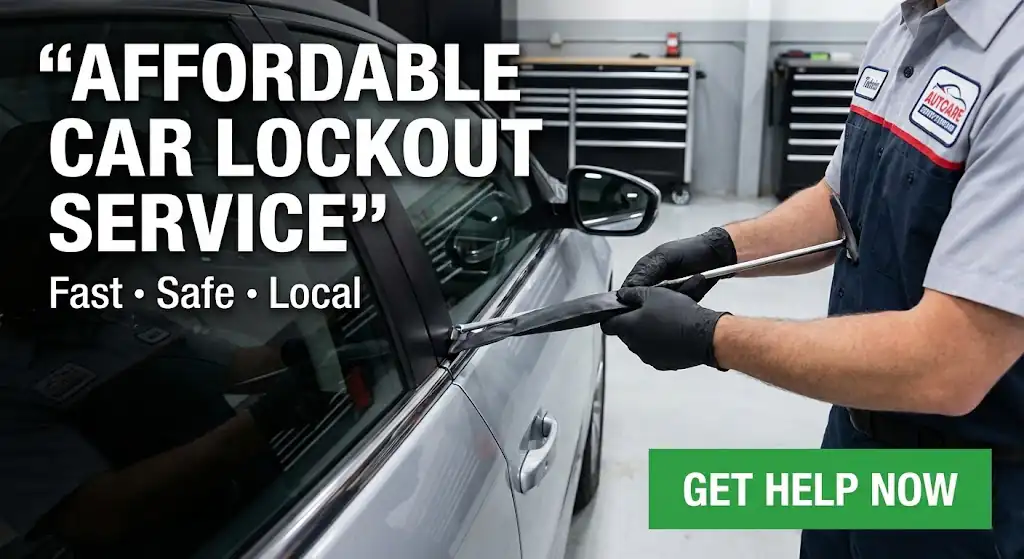
- Car unlocking / lockout service — typically $50 to $120
- Emergency fuel delivery — typically $50 to $80 plus cost of fuel
In many cases, a quick roadside fix eliminates the need for a tow entirely, which saves you money. When you call Towing Hamilton, our dispatcher will help determine whether you need a tow or if a roadside service can get you moving again on the spot.
Long Distance Towing
If your vehicle needs to be moved between cities or across Ontario, long distance towing is priced primarily by total distance. Expect to pay the base hookup fee plus $3 to $6 per kilometre for standard vehicles, or more for larger trucks and non-running cars. A tow from Hamilton to Toronto, for example, could cost anywhere from $200 to $400 depending on traffic, vehicle condition, and route.
What Factors Affect Towing Prices?
There is no single flat rate for towing in Ontario. Several variables determine your final cost. Understanding these factors helps you avoid surprises and gives you better information when requesting a quote.
1. Distance
Distance is the biggest driver of towing cost. Most companies include the first 5 to 10 kilometres in the base rate and then charge per kilometre after that. A short tow from a parking lot to a nearby mechanic will cost far less than a 60-kilometre haul across the region.
2. Vehicle Type and Weight
Compact cars, sedans, and small SUVs fall under standard towing rates. Larger vehicles like pickup trucks, full-size SUVs, vans, and commercial trucks require heavier equipment and may cost more. Vehicles over 4,536 kg (10,000 lbs) GVWR typically move into the heavy duty pricing tier.
3. Type of Tow Truck Needed
A wheel-lift tow truck is the most affordable option and works well for most front-wheel-drive vehicles. A flatbed tow truck costs more but is required or strongly recommended for AWD, RWD, low-clearance, luxury, and accident-damaged vehicles. Heavy wreckers and rotators used for semi trucks and rollovers carry the highest hourly rates.
4. Time of Day and Day of Week
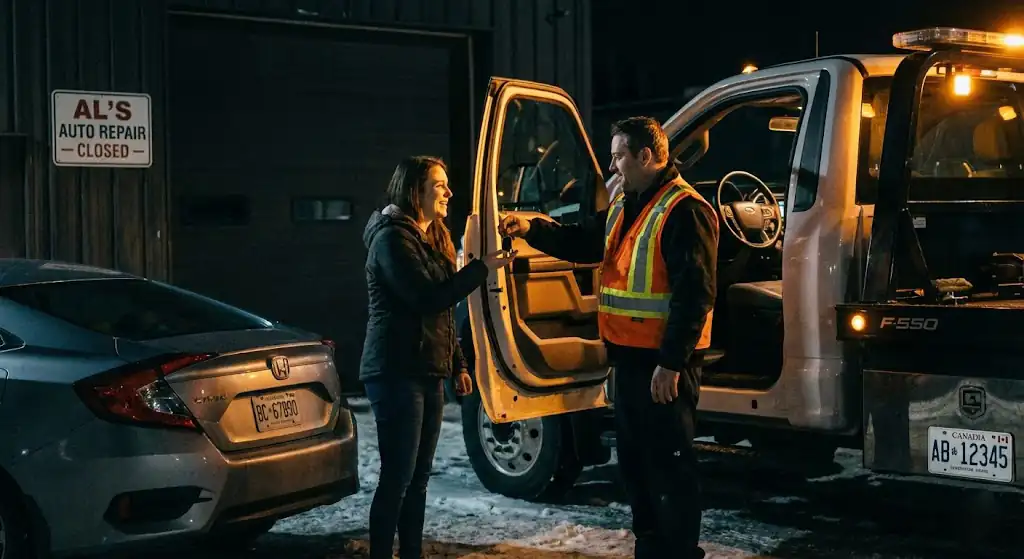
After-hours towing — late nights, early mornings, weekends, and holidays — often carries a premium. Under Ontario’s TSSEA regulations, towing companies can include after-hours billing on their rate schedule. The surcharge typically ranges from $50 to $100 on top of the base rate, though some companies absorb part or all of this cost.
5. Recovery Complexity
If your vehicle is stuck in a ditch, buried in snow, or needs to be winched out of mud, the tow becomes a recovery operation. Recovery requires specialized equipment, additional time, and skilled operators — all of which increase the cost beyond a standard hookup. Rollovers, vehicles off embankments, and parking garage extractions all fall into this category.
6. Weather and Road Conditions
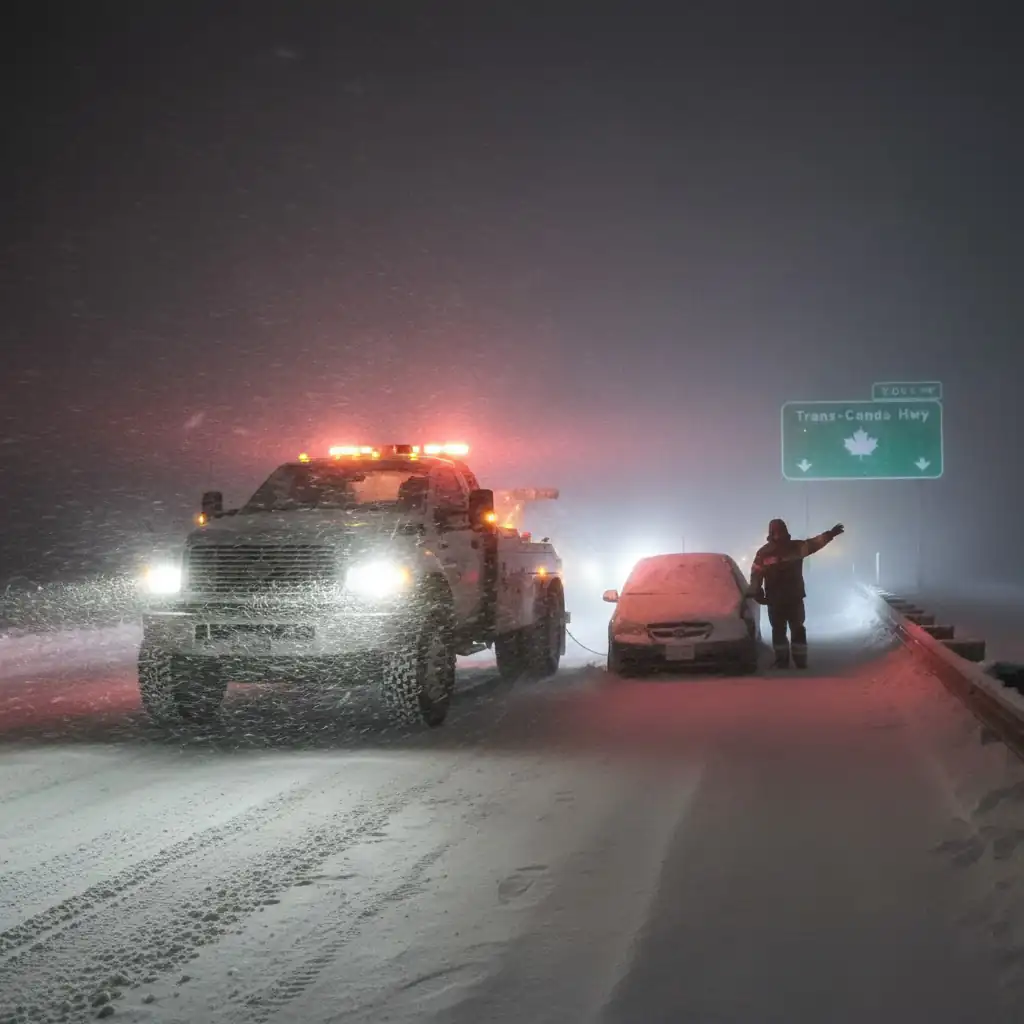
Hamilton winters create difficult conditions for towing. Snow, ice, reduced visibility, and slippery roads slow the process and may require extra equipment. During severe weather events, demand for tow trucks increases while road conditions make every job take longer, which can affect pricing and wait times.
7. Storage Fees
If your vehicle needs to be stored after being towed — for example, while waiting for an insurance adjuster or repair shop availability — daily storage fees apply. In Ontario, outdoor storage rates vary by vehicle length and can start at $40 to $80+ per day for a standard passenger vehicle.
How Ontario Regulates Towing Rates Under the TSSEA
Since January 1, 2024, all towing companies in Ontario must operate under the Towing and Storage Safety and Enforcement Act (TSSEA). This provincial legislation replaced the old patchwork of municipal licensing systems with a single, province-wide regulatory framework.
Here is what the TSSEA means for towing costs:
Maximum rate schedules are mandatory. Every tow operator in Ontario must file a maximum rate schedule with the Ministry of Transportation (MTO). These rates are publicly available, and operators cannot charge more than the maximums they have filed.
You must receive the rate schedule before consenting to a tow. Tow truck drivers are required to provide you with their company’s rate schedule before you sign any consent-to-tow form. This gives you the right to review costs upfront.
Itemized invoices are required. After the tow is complete, you must receive a detailed, itemized invoice showing exactly what you are being charged for — base tow, per-kilometre fees, recovery time, storage, and any additional billing items.
Multiple payment methods must be accepted. A tow company cannot insist on cash only. They must accept credit, debit, and other standard payment methods.
Three towing categories now exist. As of late 2025, the TSSEA introduced three distinct towing categories — Basic, Intermediate, and Advanced — each with their own billable items. This structure provides clearer cost expectations for different types of towing situations.
The TSSEA was designed to protect Hamilton drivers from predatory pricing, hidden fees, and pressure tactics. Knowing your rights helps you make informed decisions during a stressful situation. For a quick estimate tailored to your specific needs, use our towing cost estimator.
How to Reduce Your Towing Costs in Hamilton
While you cannot always control when a breakdown or accident happens, there are practical ways to lower your towing expenses.
Check Your Insurance Policy
Many Ontario auto insurance policies include some form of towing coverage, either through collision coverage, comprehensive coverage, or a roadside assistance add-on. If your policy includes towing benefits, your out-of-pocket costs could be minimal or zero. Towing Hamilton works with most major insurers and offers direct billing when your policy allows it, so you may not need to pay anything upfront.
Know the Difference Between a Tow and Roadside Assistance
A dead battery does not always mean you need a tow. A battery boost is faster and cheaper. A flat tire may only require a spare tire installation. Running out of gas just needs a fuel delivery. When you call for help, describe the problem clearly — your dispatcher may be able to send a less expensive roadside service instead of a full tow.
Ask for an Estimate Before the Truck Arrives
A reputable towing company will give you a cost estimate over the phone before dispatching a truck. Under Ontario’s TSSEA rules, you have the right to see the rate schedule before consenting to the tow. Never sign a blank form, and always confirm the destination and expected cost before giving your approval.
Choose the Nearest Drop-Off Location
Since distance is the primary cost factor, towing your vehicle to the nearest suitable mechanic, body shop, or storage facility keeps the bill lower. If your preferred repair shop is across the city, the per-kilometre charges can add up quickly.
Avoid Unauthorized or “Chaser” Tow Trucks
In Ontario, some unlicensed or aggressive tow operators show up uninvited at accident scenes and charge inflated rates. Always verify that the tow truck displays a valid TSSEA certificate number. If you did not call the tow truck yourself, you are not obligated to use it. You have the legal right to choose your own towing company.
Use a Free Online Estimate Tool
Before calling, you can get a transparent ballpark figure using our online towing cost estimator. Select your service type and distance to see an instant estimate — no phone call required.
When Towing Might Already Be Covered
Many drivers in Hamilton pay for towing without realizing they already have coverage. Here are the most common situations where towing costs may be partially or fully covered:
Auto insurance with towing coverage: If your policy includes roadside assistance or towing benefits, you may only need to pay a deductible or nothing at all. After an accident, accident towing is typically covered under collision or comprehensive policies.
CAA or roadside assistance memberships: Members of the Canadian Automobile Association (CAA) or similar programs receive towing as part of their annual membership, usually up to a set distance.
Credit card benefits: Some premium credit cards include roadside assistance and towing coverage as a cardholder benefit. Check your card agreement for details.
New vehicle warranty programs: Many new car manufacturers include complimentary roadside assistance for the first few years of ownership.
Even if towing is covered, you still have the right to choose which towing company responds. Contact Towing Hamilton directly and we can coordinate with your insurer, CAA, or warranty provider.
Frequently Asked Questions About Towing Costs in Hamilton
How much does a basic tow cost in Hamilton?
A standard wheel-lift tow for a passenger car within Hamilton typically costs between $75 and $150 for the base rate, which usually includes the first 5 to 10 kilometres. Additional distance is charged at $3 to $6 per kilometre. The exact price depends on the towing company’s filed rate schedule, your vehicle type, and any after-hours fees that may apply.
How much does flatbed towing cost compared to regular towing?
Flatbed towing generally costs 30 to 50 percent more than wheel-lift towing because the equipment is more specialized and typically handles one vehicle at a time. For a local tow in Hamilton, expect to pay roughly $100 to $200+ for a flatbed tow. The added cost is worth it for AWD vehicles, luxury cars, lowered vehicles, and cars with collision damage.
How are towing prices calculated — by distance, time, or vehicle type?
Towing costs in Ontario are generally calculated using a combination of a base hookup fee, distance (per kilometre after the initial included distance), vehicle size and weight class, and any additional services like recovery, winching, or after-hours dispatch. The TSSEA requires operators to file all of these rates with the Ministry of Transportation.
Does insurance cover towing after a car accident in Hamilton?
In most cases, yes. If your auto insurance includes collision or comprehensive coverage, towing after an accident is typically included. Some policies also have a separate roadside assistance add-on. Towing Hamilton offers direct insurance billing for qualifying policies, so you may not need to pay anything out of pocket at the scene.
Why does towing cost more at night or on weekends?
After-hours towing involves dispatching drivers during off-peak times when operational costs are higher. Under Ontario’s TSSEA regulations, towing companies are permitted to include an after-hours surcharge on their rate schedule. “After-hours” generally means before 8 a.m. or after 6 p.m. on weekdays, Saturdays after noon, and all day on Sundays and holidays.
How much does a winch-out or recovery cost in Hamilton?
A winch-out or vehicle recovery is priced separately from standard towing. The cost depends on the difficulty of the recovery — a car in a shallow ditch may cost $100 to $200, while a vehicle stuck deep in mud or snow requiring extended winching could cost $200 to $500+. Heavy vehicle recoveries with rotator equipment are significantly more.
Can I get a towing cost estimate before calling?
Yes. Towing Hamilton offers a free online towing cost estimator where you can select your service type and estimated distance to receive an instant ballpark price. You can also call our dispatch line for a verbal quote before any truck is sent.
Is there a way to get free towing in Hamilton?
Truly free towing is rare, but there are scenarios where you would not pay out of pocket: insurance policies with towing coverage, CAA memberships, credit card roadside benefits, and new vehicle warranty programs. For scrap car removal, Towing Hamilton offers free pickup and pays you cash on the spot for qualifying junk vehicles.
What is the cheapest towing option in Hamilton?
The most affordable option is usually a standard wheel-lift tow over a short distance during regular business hours. To keep costs down, tow your vehicle to the nearest suitable destination, confirm the estimate before consenting, and check whether your insurance or roadside membership covers the service.
How much does it cost to tow a car per kilometre in Ontario?
Per-kilometre rates in Ontario generally range from $3 to $6 for standard passenger vehicles and $5 to $7.50+ for heavier trucks and commercial vehicles. These rates apply after the initial included distance, which is typically the first 10 kilometres. Exact per-km rates vary by towing company and must be listed on their filed TSSEA rate schedule.
Get a Free Towing Estimate in Hamilton
Whether you need a quick local tow, a flatbed for your AWD vehicle, heavy duty recovery, or just a battery boost to get moving again — Towing Hamilton provides transparent pricing, fast dispatch, and professional service across Hamilton, Burlington, Waterdown, and Grimsby.
Try our free online towing cost estimator for an instant estimate, or call us directly for a no-obligation quote. Our tow trucks operate 24 hours a day, 7 days a week — so help is always available when you need it most.
Call Towing Hamilton now for a free estimate → (905) 481-0133
Your content goes here. Edit or remove this text inline or in the module Content settings. You can also style every aspect of this content in the module Design settings and even apply custom CSS to this text in the module Advanced settings.