What to Do If Your Car Breaks Down on the QEW or 403 in Hamilton
Breaking down on a Hamilton highway is one of the most stressful driving experiences you can have. The QEW and Highway 403 carry tens of thousands of vehicles daily at speeds of 100–120 km/h. When your car suddenly loses power, gets a flat, or the engine dies — and you’re sitting on a narrow shoulder with transport trucks screaming past at arm’s length — every second feels like an hour.
The good news: if you follow the right steps, a highway breakdown in Hamilton is a solvable problem. The bad news: the wrong decision — walking along the shoulder, trying to change a tire next to live traffic, or standing behind your car to wave people down — can turn a breakdown into a life-threatening situation. Pedestrians on highway shoulders are struck and killed every year in Ontario.
This guide covers exactly what to do if your car broke down on the QEW, Highway 403, the Linc, or the Red Hill Valley Parkway — with specific Hamilton-area reference points, who to call first, how to describe your location, what the tow process looks like on a highway, and what it costs. If you’re reading this from the shoulder right now, skip to the phone number above and call.
Step 1: Get Off the Road Safely
The moment you realize something is wrong — engine sputtering, steering going heavy, warning lights flooding the dashboard, a loud bang from a tire — your only priority is getting off the road:
Signal right immediately. Other drivers need to know you’re slowing down. Use your turn signal and begin moving toward the right shoulder. On multi-lane highways like the QEW and 403, work your way right one lane at a time.
Coast as far right as possible. Even with no engine power, your car has momentum. Use it. The further right you can get — ideally onto the paved shoulder with all four wheels off the travel lane — the safer you are. Avoid stopping on the left shoulder (median) unless there’s absolutely no way to reach the right side.
Power steering and power brakes will feel different. When the engine dies, you lose power assist on steering and brakes. The wheel becomes heavy and the brake pedal becomes stiff — but both still work. Steer firmly and press the brakes harder than normal. You can still control the car; it just requires more physical effort.
Aim for a wide spot if possible. Off-ramps, emergency pull-off areas, wide shoulders near overpasses, and highway service entrances are all better stopping points than a narrow shoulder. On the QEW and 403, shoulders vary from very wide near interchanges to very narrow in some construction zones.
🚨 If You Can’t Reach the Shoulder: If your vehicle is stuck in a live traffic lane and cannot be moved — engine seized, flat tire at low speed, accident blocking movement — turn on your hazard lights, keep your seatbelt on, and call 911 immediately. Do NOT exit the vehicle into live traffic. Police will dispatch traffic control and coordinate the tow. A vehicle blocking a lane on the QEW or 403 is a 911 emergency, not a regular tow call.
Step 2: Make Yourself Visible and Stay Inside
Once you’re stopped on the shoulder, your immediate priorities are visibility and personal safety:
Turn on hazard lights. This is the single most important visibility step. Hazard lights run off the battery and work even with the engine dead. Leave them on until help arrives — they warn approaching drivers that something is wrong ahead.
Stay inside the vehicle with your seatbelt on. This is counterintuitive — every instinct says “get out and see what’s wrong.” Resist it. On the QEW and 403, traffic passes at 100+ km/h just metres from the shoulder. Your vehicle, even stopped, provides significant crash protection. Standing outside puts you directly in the path of any vehicle that drifts onto the shoulder — which happens more often than you think, especially at night, in rain, or during winter conditions.
If you have reflective triangles: Only place them if you can safely exit on the passenger side (away from traffic) and only if you’re on a wide shoulder with a safe walking path. Place them at least 50 metres behind your vehicle. If the shoulder is narrow or conditions are bad — skip the triangles and let your hazard lights do the work. No warning triangle is worth risking your life.
If you must exit the vehicle: Exit from the passenger side (away from traffic). Step over the guardrail if there is one and stand well away from the road. Never stand between your vehicle and traffic. Never stand directly behind or in front of the vehicle.
Ontario’s Move Over law requires drivers to slow down and move over a lane when passing emergency vehicles, tow trucks, and stopped vehicles with flashing lights on the shoulder. But not every driver follows this law — which is why staying inside your vehicle is always the safest choice.
Step 3: Call for Help — But Who First?
Who you call depends on your specific situation. Here’s the decision tree:
Call 911 First If:
Your vehicle is blocking a live traffic lane. You’ve been in an accident with injuries. You feel your location is dangerous (narrow shoulder, curve, poor visibility). Someone is behaving aggressively. You smell gas or see smoke. Police will dispatch OPP or Hamilton Police, who will manage traffic and coordinate emergency towing.
Call Towing Hamilton at (905) 481-0133 If:
You’re safely on the shoulder, the vehicle won’t move, and you need a tow, battery boost, tire change, or fuel delivery. This is the fastest option — local dispatching means typical arrival on the QEW/403 in Hamilton is 20–35 minutes. Tell the dispatcher you’re on a highway so the truck is prepared for shoulder work.
Call Insurance/CAA If:
You’re safely positioned, the situation isn’t urgent, and you want to use your roadside assistance coverage. Expect 30–90 minutes for dispatch. If the estimated wait is too long for a highway shoulder, call a local company directly and submit the receipt for insurance reimbursement afterward.
For a complete guide to the full tow truck process from call to delivery, see what happens when you call a tow truck.
Step 4: Describe Your Location Accurately
The biggest time-waster in highway towing is a driver who can’t describe where they are. “I’m on the QEW somewhere near Hamilton” could mean anywhere over a 40 km stretch. Here’s how to pinpoint your location:
Use Google Maps on your phone. Open Google Maps, tap the blue dot showing your location, and it will display your GPS coordinates or nearby address. Share this directly with the dispatcher — it’s the most accurate method.
Look for highway reference markers. Ontario highways have small green kilometre markers on the right-hand side of the road — they read something like “QEW 42” or “403 17.” Relay this number to the dispatcher. If you can’t see a km marker, describe the nearest exit or interchange you passed.
Use landmarks. Overpasses, exit signs, and nearby businesses are all useful references. “I’m on the QEW westbound, just past the Centennial Parkway overpass” or “I’m on the 403 eastbound between the Mohawk Road and Lincoln Alexander exits” are much more useful than “I’m on the highway.”
State your direction of travel. “QEW eastbound” vs. “QEW westbound” sends the tow truck to the correct side of the highway. If you’re unsure of direction, describe what you can see — “I can see the Hamilton skyline ahead of me” or “I can see the Burlington Skyway behind me” helps the dispatcher figure out your direction.
Hamilton’s Highways: Zone-by-Zone Breakdown Guide
Each Hamilton-area highway has different characteristics that affect breakdowns and response. Here’s what to know for each:
How Highway Towing Differs from Regular Towing
Emergency towing on highways is a different operation than picking up a car from a parking lot. Here’s what makes it unique:
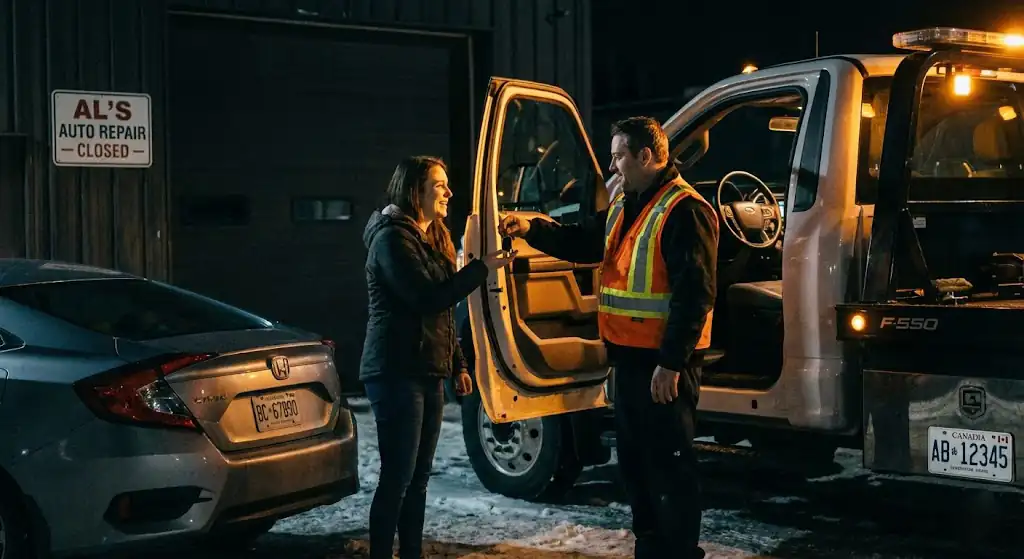
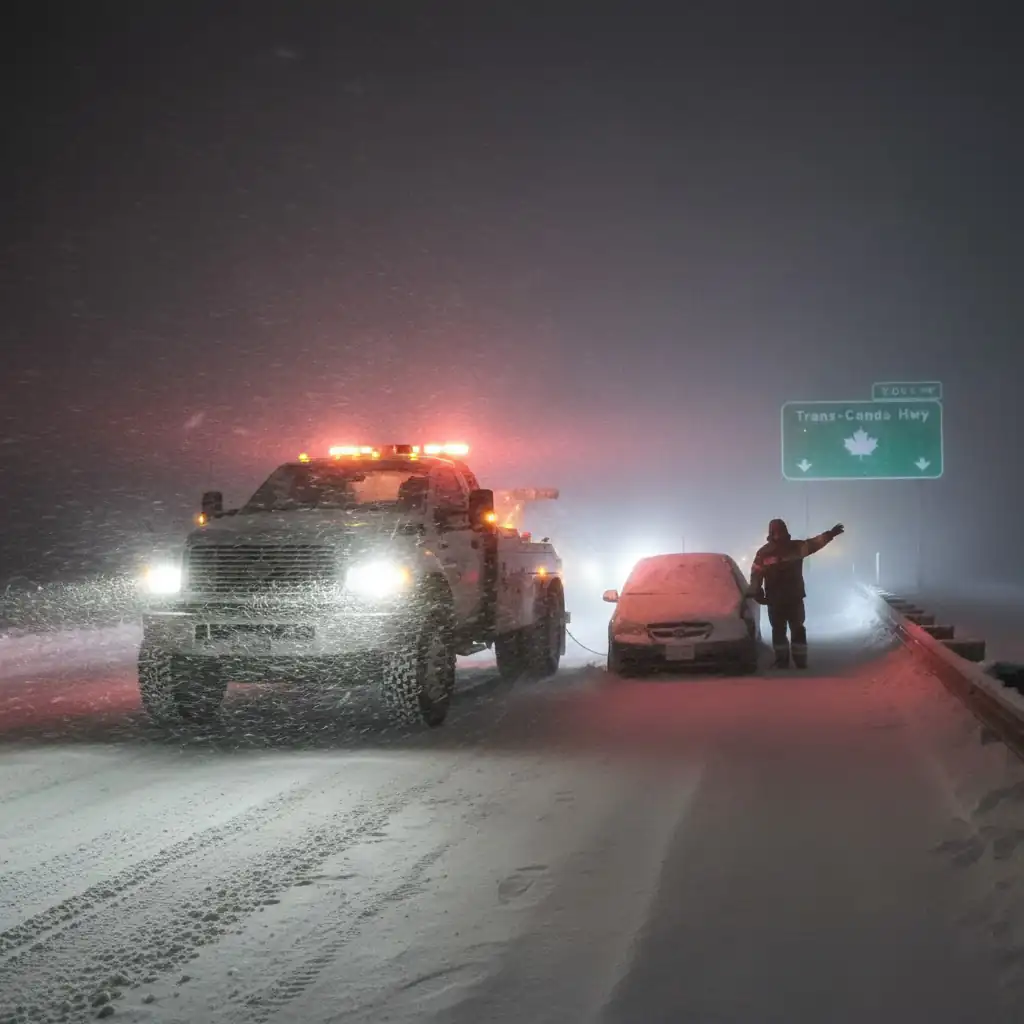
The tow truck shields you. On highway calls, the operator positions their truck behind your vehicle at an angle, with all lights flashing. This creates a physical barrier between your car and approaching traffic. The truck absorbs any rear-end impact that would otherwise hit your vehicle — this is deliberate and is standard highway towing safety protocol.
Hook-up is faster. Experienced highway operators work quickly because every minute on the shoulder increases risk. A highway wheel-lift hook-up takes 2–3 minutes. A flatbed loading takes 8–12 minutes. The operator will ask you to stay in the truck cab during loading for your safety.
Police may be involved. On OPP-patrolled highways (QEW), police sometimes arrive before the tow truck — the OPP actively monitors highway safety conditions. OPP officers can provide traffic control and may radio a tow truck through their dispatch system. You can still request your own towing company and destination under the TSSEA.
The destination must be off the highway. You can’t ask the tow operator to drop you two exits up — a tow from a highway takes the vehicle to a specific off-highway location: your mechanic, a gas station, your home, or a storage facility. The TSSEA requires the operator to take the most direct route to your chosen destination.
How Much Does Highway Towing Cost in Hamilton?
Highway towing in Hamilton follows the same base-plus-per-km pricing structure as local towing, though response urgency and highway-specific operations can affect cost:
Prices are Hamilton-area estimates for highway breakdown scenarios. After-hours and holiday rates may be higher. All charges must comply with TSSEA-published maximum rates. For detailed pricing info, see our guides on towing cost per kilometre and how much towing costs in Hamilton.
The Most Common Highway Breakdown Causes in Hamilton
Knowing what causes most highway breakdowns helps you prevent them. Here’s what generates the majority of Hamilton highway tow calls:
Flat tires and blowouts. The QEW and 403 carry heavy truck traffic, which drops debris, nails, and tire fragments. Potholes — especially in spring after winter freeze-thaw cycles — cause sidewall damage. A flat tire on a highway is dangerous to change yourself due to traffic speed and proximity. Call for roadside tire service unless you’re on a wide, safe shoulder with low traffic.
Overheating. Summer traffic jams on the QEW — especially between Burlington and Hamilton during rush hour — cause engines to overheat. Sitting in stop-and-go traffic on a 35°C day with the AC blasting pushes cooling systems to their limit. If your temperature gauge redlines, pull over immediately — driving with an overheated engine causes catastrophic damage.
Dead battery. Batteries that are aging or weak can fail under highway driving conditions — alternator issues, electrical faults, or simply an old battery that gives out. This is especially common in winter. Read our guide on 5 warning signs your battery is dying and how to jump start a car battery.
Running out of fuel. The stretch of QEW between Hamilton and Grimsby has limited gas station access — and drivers who meant to stop often don’t until it’s too late. Fuel delivery is the solution — never walk along the QEW to find a gas station.
Collision-related breakdowns. Fender-benders, sideswipes, and rear-end collisions on the QEW and 403 render vehicles undriveable even when the damage looks minor. Bent suspension, damaged wheels, or deployed airbags all mean you’re not driving home. Accident towing on a flatbed is the standard for collision-damaged vehicles.
What NOT to Do During a Highway Breakdown
These common mistakes turn manageable breakdowns into dangerous situations:
🚫 Do NOT try to change a tire on a highway shoulder. Jacking up a car on a narrow, uneven, vibrating shoulder — with trucks blasting past at 100 km/h — is extremely dangerous. Call for a roadside tire change or a tow instead. Your life is worth more than the service call.
🚫 Do NOT walk along the highway. Walking along a highway shoulder — to reach an exit, a gas station, or a call box — puts you at extreme risk of being struck. Drivers don’t expect pedestrians on highway shoulders. Stay in your vehicle and use your phone.
🚫 Do NOT stand behind or between your car and traffic. If a distracted driver drifts onto the shoulder and strikes your vehicle, anyone standing behind or beside it will be caught between the vehicle and the impact. If you must exit, go over the guardrail on the far side.
🚫 Do NOT try to merge back into traffic if your vehicle is limping. A car operating at reduced power, with a flat tire, or with overheating issues should NOT be in a live highway lane. A vehicle doing 40 km/h in a 100 km/h zone is a rear-end collision waiting to happen. Pull over and call for help.
🚫 Do NOT accept a tow from someone you didn’t call. If a tow truck arrives that you didn’t request, you are under no obligation to use them. Under the TSSEA, you choose your tow company and your destination. Uninvited highway towing is a prohibited practice.
🚫 Do NOT leave your vehicle unattended for extended periods. Abandoned vehicles on highway shoulders are eventually tagged and towed by police — resulting in impound fees of $200–$500+ on top of whatever the original problem was. If you must leave the vehicle, call a tow to retrieve it as soon as possible.
Night and Winter Highway Breakdowns: Extra Precautions
Breaking down on the QEW or 403 in daylight during summer is stressful. At night in a January snowstorm, it’s genuinely dangerous. These conditions require additional precautions:
Night: Visibility is everything. Without hazard lights, your stopped vehicle is nearly invisible to approaching drivers. Keep them on. If your battery is weak, prioritize hazard lights over interior lights, radio, or phone charging. If you have reflective triangles and can safely place them, do so. A reflective safety vest from your emergency kit makes you visible if you must step out.
Winter: Hypothermia is a real risk. Once the engine stops, your car loses heat fast. In -15°C with wind chill on the QEW, the interior drops to near-outside temperatures within 30 minutes. Use the blanket, extra clothing, and hand warmers from your winter kit. If you run the engine periodically for heat, check that the exhaust pipe is clear of snow to prevent carbon monoxide buildup.
Winter: Battery drain is accelerated. Cold temperatures reduce battery capacity by 30–50%. Your hazard lights, phone charging, and any interior lights drain it faster. A portable power bank for your phone is critical in these conditions — if the car battery dies, your phone is your only link to help.
Winter: Response times may increase. During severe weather events — ice storms, heavy snowfall, extreme cold snaps — every tow company in the region is flooded with calls. Response times that are normally 20–35 minutes may extend to 45–90 minutes. Call early, be patient, and stay warm. A local company like Towing Hamilton prioritizes highway calls because of the safety risk.
Maybe You Don’t Need a Tow: On-Site Fixes on the Highway
Not every highway breakdown requires towing. Some can be resolved on the shoulder by a roadside assistance technician:
Dead battery → Battery boost ($85–$135). A technician jump-starts your car on the shoulder. If the engine starts, you drive to a safe location or mechanic. No tow needed.
Flat tire with a spare → Tire change ($100–$175). On a wide, safe shoulder, a technician can swap your flat for your spare. You drive to a tire shop. Highway tire changes are only done when conditions are safe — the technician will assess and may recommend a tow instead if the shoulder is too narrow or traffic too heavy.
Ran out of fuel → Fuel delivery ($80–$110). A technician brings 5–10 litres of gas to your location. You drive to the nearest station. No tow needed.
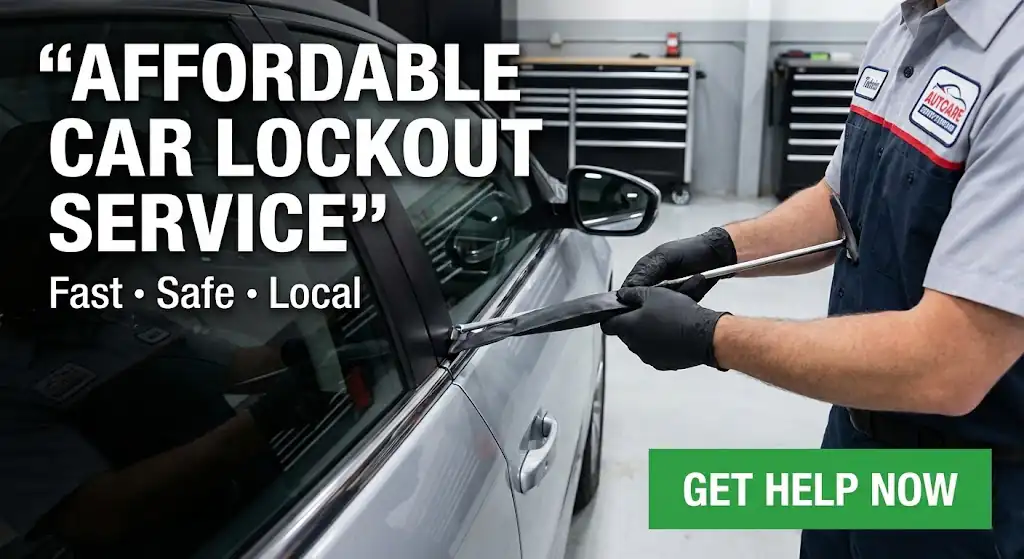
Locked out → Car lockout service ($75–$150). If you locked your keys in the car at a rest stop or pull-off, a technician opens the door without damage.
When you call (905) 481-0133, describe the problem — the dispatcher will recommend the cheapest appropriate service. Not every highway stop ends in a tow bill.
Be Ready: Save This Number Before Your Next Highway Drive
The drivers who handle highway breakdowns calmly are the ones who prepared in advance. Before your next trip on the QEW, 403, Linc, or Red Hill:
Save (905) 481-0133 in your phone now. Label it “Towing Hamilton — Highway Emergency.” One tap when you need it, instead of Googling from a highway shoulder with shaking hands.
Keep a winter emergency kit in your trunk. Phone charger, blanket, flashlight, reflective triangles, water, snacks. On a highway shoulder, these items go from “nice to have” to “essential.”
Know your coverage. Check if your insurance includes roadside assistance. Know your CAA membership tier. Have the numbers saved alongside your towing company contact.
Know your drivetrain. If you drive an AWD vehicle or an EV, you need a flatbed — not a wheel-lift. Knowing this in advance saves time on the call. See our drivetrain towing guide and our EV towing guide.
Maintain your vehicle before highway trips. Check tire pressure and tread, test your battery if it’s 3+ years old, keep fuel above a quarter tank, and address any dashboard warning lights before they become a highway shoulder problem.
Highway Breakdown FAQ
What should I do if my car breaks down on the QEW?
Pull as far right as possible, turn on hazard lights, and stay inside with your seatbelt on. Call 911 if you’re blocking a lane or feel unsafe. Otherwise, call a local towing company at (905) 481-0133 for the fastest response. Provide your exact location using Google Maps, a highway km marker, or the nearest exit. Do not walk along the QEW or attempt roadside repairs in live traffic. Typical response time in the Hamilton area is 20–35 minutes.
How long does a tow truck take on the highway in Hamilton?
A local Hamilton towing company typically arrives on the QEW, 403, Linc, or Red Hill within 20–35 minutes. Insurance and CAA dispatch may take 30–90 minutes because they route through a central dispatch system that may assign a non-local operator. During severe weather or peak demand, all response times can extend. For highway breakdowns, calling a local company directly is usually the fastest option.
Should I call 911 for a highway breakdown?
Call 911 if your vehicle is blocking a live traffic lane, if there are injuries, if you smell fuel or see smoke, if you’re on the Burlington Skyway with no shoulder, or if you feel your location is unsafe. For a standard breakdown where you’re safely on the shoulder, call a towing company directly — 911 is for emergencies where safety is immediately at risk. On OPP-patrolled sections (QEW), officers may arrive independently if your vehicle is reported by passing motorists.
Should I get out of my car on the highway?
In most cases, stay inside with your seatbelt on. Your vehicle provides protection from passing traffic. The only reasons to exit: if the vehicle is on fire, if you smell fuel strongly, if the vehicle is in immediate danger of being hit (stuck in a lane), or if you can safely exit on the passenger side and move behind a guardrail or barrier. Never exit on the driver (traffic) side. Never stand behind or beside your vehicle near the road.
How much does highway towing cost in Hamilton?
Highway towing to a local destination in Hamilton typically costs $100–$225 depending on the truck type (flatbed costs more than wheel-lift), the distance to the destination, and the time of day. Battery boosts run $85–$135, tire changes $100–$175, and fuel delivery $80–$110. All charges must comply with TSSEA-published rates. Use the Towing Hamilton cost estimator for a personalized price.
Can I change a flat tire on the QEW or 403?
Technically possible but strongly discouraged due to safety risks. Highway shoulders are narrow, traffic passes at extreme speed, and the vibration from trucks can knock a vehicle off a jack. If you’re on a wide, clearly safe shoulder with low traffic, it’s your judgment call. In most cases, calling for professional roadside tire service ($100–$175) or a tow is significantly safer. A professional technician has flashing lights and equipment to protect both of you during the change.
What if I break down on the Burlington Skyway?
The Burlington Skyway has no usable shoulder — this is one of the most dangerous breakdown locations on the QEW. If you lose power on the Skyway, activate hazard lights immediately and coast to the end of the bridge if possible. If you cannot, call 911 — a vehicle stopped on the Skyway is a traffic emergency. Keep your seatbelt on and stay inside. OPP will dispatch traffic control and coordinate a tow. Never attempt to exit your vehicle on the Skyway.
Can I choose my own tow company on the highway?
Yes. Under Ontario’s TSSEA, you have the right to choose which company tows your vehicle and where it goes — even on a highway, even if police are present. The only exception is when police direct immediate removal for traffic safety, in which case the vehicle is moved to a safe location and you can arrange further transport from there. If an uninvited tow truck arrives at your highway breakdown, you can refuse their service.
How do I describe my location on the highway?
Use Google Maps to share your GPS coordinates (most accurate). If that’s not possible, look for green highway kilometre markers on the right shoulder (e.g., “QEW 42”). If you can’t find a marker, name the highway, your direction of travel (eastbound or westbound), and the last exit or overpass you passed. Landmarks like the Skyway, the Linc interchange, or specific road overpasses also help. Include which shoulder you’re on (right or left/median).
What if my car broke down on the Red Hill Valley Parkway?
Follow the same steps: pull right, hazards on, stay inside, call for help. The Red Hill has grassy shoulders that slope into ditches — if you’ve left the road surface, you may need winching and recovery in addition to towing. The Red Hill’s curves and valley microclimate make it particularly hazardous in wet and icy conditions. Response times from Hamilton-based towing companies are typically fast (15–30 minutes) due to the Parkway’s central location.